What is a bivy sack? It is one of the lightest shelter options a camper can carry, one of the most misunderstood pieces of gear in any outdoor kit, and one of the most searched terms in the shelter and sleep category for good reason.
Before going further, a quick note on names. Bivy, bivvy, bivi, bivy bag, bivvy bag, bivouac sack, and bivy cover all refer to the same product. The spelling varies by region and brand, but the item is the same. This article uses “bivy sack” as the standard term throughout, and all search variations lead to the same answer.
Table of Contents
A bivy sack is a waterproof outer shell that slides over your sleeping bag and provides weather protection, wind blocking, and a small amount of additional warmth without the weight, bulk, or setup complexity of a tent. It is not a tent. It is not a sleeping bag. It is a shell around your sleep system.
This guide covers what a bivy sack is, the four main types, what it does and does not do for warmth, why condensation is a real problem, how to use one correctly, how it compares to a tent, and our top five picks available on Amazon.com for 2026.
Prefer to watch first? This video breaks down the full bivy versus tent comparison before you read the detailed guide below.
What Is a Bivy Sack?
A bivy sack is a portable, lightweight, waterproof shell designed to slip over a sleeping bag and protect the sleep system from rain, wind, insects, and ground moisture. The word bivy comes from the French word bivouac, meaning a temporary camp or an improvised overnight shelter. The full term bivouac sack was shortened over time to bivy sack, then further abbreviated to bivy, bivvy, or bivi depending on who you ask.
The simplest way to understand a bivy sack is to think of it as a weatherproof cover for your sleeping bag rather than a shelter in the traditional sense. A tent creates a room. A bivy sack creates a cocoon. It wraps around you and your bag and blocks what would otherwise reach you directly: rain soaking the outer shell of your sleeping bag, wind stripping warmth from the fabric, insects crawling across you in the night, and cold ground moisture wicking into the bag below you.
What a bivy sack does not do is equally important to understand. It provides no internal space to sit up, no vestibule to store wet gear, no headroom to change clothes, and no protected cooking area. Everything beyond the sleeping system itself lives outside the bivy. If you need space for those things, a tent is the correct shelter.
The purpose of a bivy sack is defined by what kind of camper it suits best. Fast and light solo travellers, alpine climbers, ultra-distance hikers, and emergency-preparedness campers all use bivy sacks because the trade-off of no living space is acceptable for the gain in pack weight, pack size, and setup speed. For a family camping trip or a multi-night trip in sustained rain, a tent is the practical choice.
The Four Types of Bivy Sack
Not all bivy sacks are the same. The term covers four distinct product types that serve different purposes and perform very differently in real conditions.
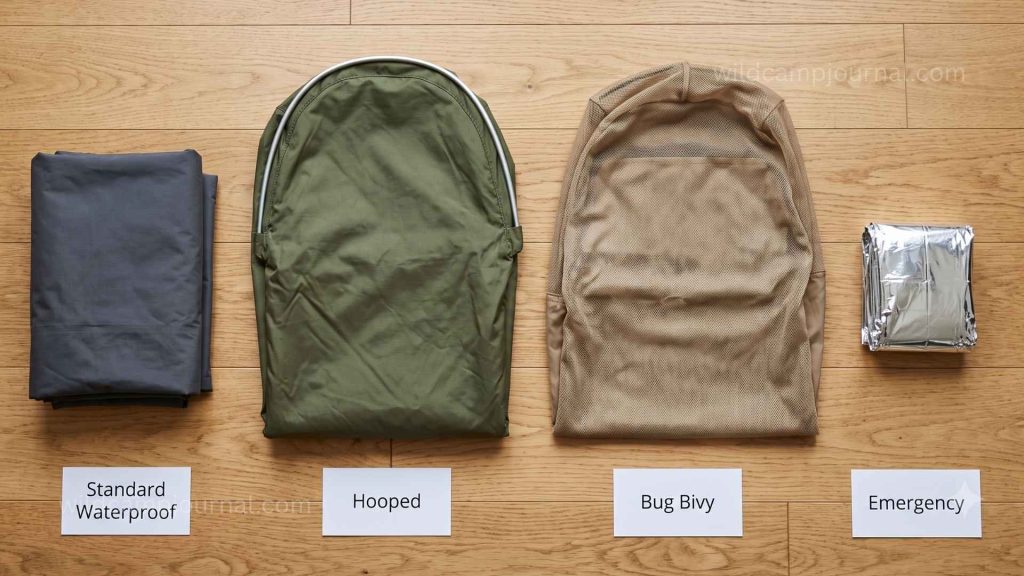
Standard Waterproof Bivy Sack
The standard waterproof bivy is a fully enclosed shell made from a waterproof and breathable fabric, most commonly Gore-Tex or a proprietary equivalent. It has a waterproof floor, waterproof sides, and a breathable or waterproof top panel depending on the design. Most models have a zip or drawstring closure at the head end that can be adjusted for ventilation or closed fully in heavy rain.
This is the correct bivy type for planned overnight camping in variable or wet conditions. It protects against sustained rain, wind, and cold, and can function as a standalone shelter in moderate conditions when paired with a tarp above it. The waterproof breathable fabric reduces condensation compared to non-breathable alternatives, though it does not eliminate the condensation problem entirely.
Hooped Bivy Sack
A hooped bivy has a short aluminium or fibreglass hoop at the head end that holds the fabric away from the face. This creates a small pocket of air space between the bivy fabric and the sleeper’s face, which reduces the direct condensation that forms when breath contacts a cold waterproof surface.
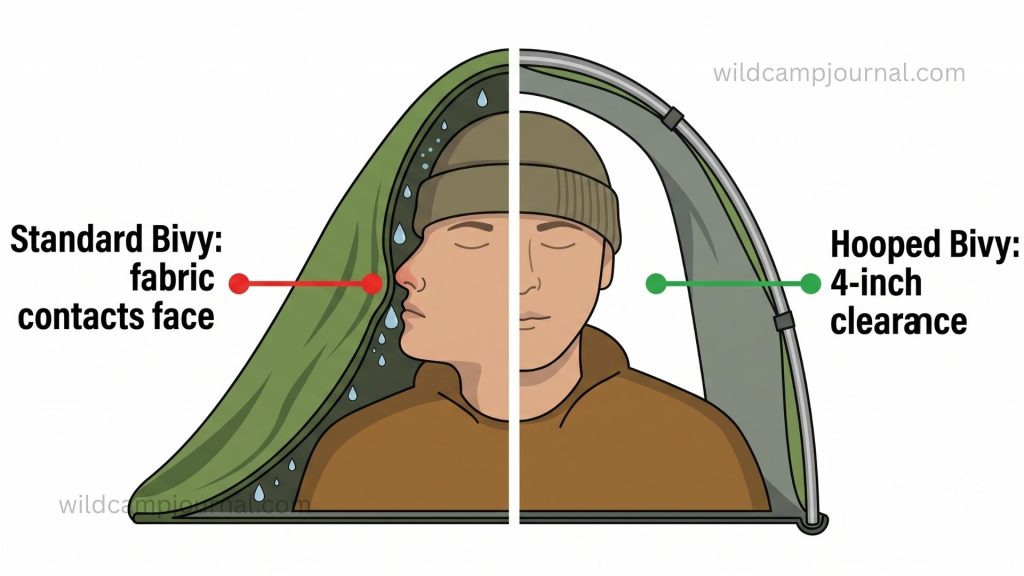
Hooped bivies sit in a category between a standard bivy and a bivy tent. They are heavier and bulkier than flat bivies but significantly more comfortable for longer use because the airspace reduces the suffocating feeling that some sleepers report in flat bivies. If claustrophobia is a concern, a hooped bivy is the practical solution.
Bug Bivy Sack
A bug bivy uses a mesh canopy over the upper body and face combined with a solid waterproof floor. It provides no weather protection from above, only insect protection and ground moisture control. Bug bivies are used under tarps, hammocks, or in open-air conditions where rain is not a concern but insects are.
In high-humidity, warm-weather camping in woodland or near water, a bug bivy paired with a tarp above is a genuinely effective and lightweight system. In rain or cold conditions, a bug bivy alone is completely inadequate.
Emergency Bivy Sack
An emergency bivy is made from thin aluminised mylar or a similar reflective material. It reflects body heat back toward the sleeper, which in a survival situation can be the difference between hypothermia and staying warm enough to function. Emergency bivies weigh almost nothing, cost very little, and pack into a pocket.
They are designed for survival use only, not for planned overnight camping. The mylar material does not breathe at all, which means condensation builds up rapidly, the noise from the crinkling fabric is significant, and the material tears easily. An emergency bivy belongs in every hiker’s kit as a backup, but it is not a substitute for a proper waterproof bivy or a tent on a planned trip.
What a Bivy Sack Is Not
Several products use similar names or are often confused with bivy sacks. Understanding the differences prevents buying the wrong item.
A bivy sack is not a sleeping bag. A sleeping bag goes inside the bivy. A bivy sack goes outside the sleeping bag. They are completely separate items used together as a sleep system. Buying a bivy sack without a sleeping bag and expecting it to keep you warm on its own in cold conditions will result in a genuinely dangerous night.
A bivy sack is not a survival bag. A survival bag is a large, thick polyethylene bag used in emergencies to prevent hypothermia. It is single use, non-breathable, and not designed for extended overnight use. A bivy sack, particularly a Gore-Tex model, is a durable, breathable, multi-season piece of equipment that costs significantly more and performs far better for planned overnight camping.
A bivy sack is not a bivy tent. A bivy tent is a small single-person tent with poles, a floor, and enough headroom to sit up inside. The name contains the word bivy, but it is functionally a compact solo tent rather than a shell. Bivy tents weigh more than bivy sacks, take longer to set up, but provide genuine living space.
A bivy sack is not the same product regardless of spelling. Bivy, bivvy, bivi, bivy bag, bivvy bag, and bivouac sack are all the same item. Bivy tent and bivy cover refer to different products in some contexts. Always check the product description rather than relying on the label alone.
How Much Warmth Does a Bivy Sack Add?
A standard waterproof bivy sack adds approximately 5 to 10 degrees Fahrenheit of effective warmth to a sleeping bag. The mechanism is straightforward: the bivy traps a thin layer of air around the outside of the sleeping bag and blocks wind, which is one of the most significant drivers of heat loss in outdoor sleeping.
The insulation value of the bivy itself is minimal. A mylar emergency bivy adds more warmth than a breathable Gore-Tex model because the reflective surface bounces radiant heat back toward the sleeper, but the Gore-Tex model is far more practical for actual camping use because it manages moisture and does not create an unbearably humid environment inside.
Is a bivy sack warmer than a tent? Not directly, in the way the question is usually meant. A tent creates an enclosed air space that gradually warms up from body heat over the course of a night. A bivy does not create that air space. However, a bivy in combination with the right sleeping bag and sleeping pad performs comparably to a three-season tent in mild to moderate conditions, with the advantage of faster setup and less weight.
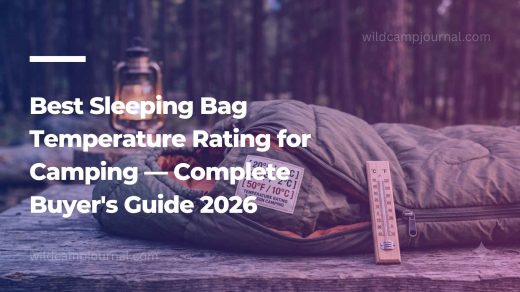
The most important rule when using a bivy is that your sleeping bag temperature rating still determines your core warmth. A bivy adds 5 to 10 degrees of effective warmth on top of the bag, but if your bag is rated 10 degrees above the overnight low before adding the bivy, you will likely still be cold. Use the bivy as a buffer, not as a substitute for a correctly rated sleeping bag. For a full guide on matching sleeping bag ratings to conditions, read our sleeping bag temperature rating guide.
The Condensation Problem
Condensation is the most consistently cited complaint about bivy sacks across every review source and camping forum, and it is a real problem, not an exaggerated one.
When you breathe inside a bivy, warm moist air from your lungs contacts the cold inner surface of the waterproof fabric and condenses into water droplets. In a tent, this moisture can circulate, vent through mesh panels and flysheet vents, and dissipate overnight. In a bivy sack, the small enclosed volume means moisture builds up faster with fewer ways to escape.
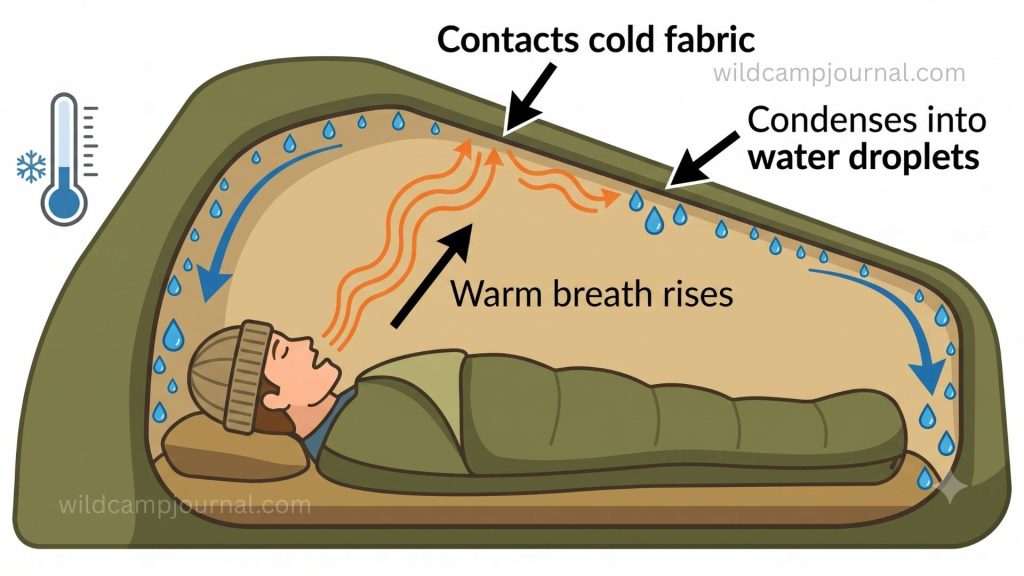
A breathable Gore-Tex or waterproof breathable fabric bivy reduces this problem significantly compared to a non-breathable alternative. The fabric allows water vapour to pass through from the inside while blocking liquid rain from the outside. In practice, breathable bivies still accumulate some moisture in cold conditions, particularly around the head end where most breathing occurs.
The most effective strategies for managing condensation in a bivy sack are:
Leave the head opening slightly ajar. On nights without heavy rain, keeping the head opening partially open allows warm moist air to escape before it condenses on the fabric. Even a small gap makes a significant difference to the internal humidity level overnight.
Use a hooped bivy in cold or humid conditions. The air space created by the hoop at the head end keeps the fabric away from your face and reduces direct condensation at the point where it accumulates most.
Face into the wind when possible. Light airflow across the head opening naturally draws moist air out of the bivy and replaces it with drier outside air.
Pair the bivy with a tarp rather than using it fully enclosed. A tarp above provides rain protection that allows the bivy head opening to stay partially open in most conditions, giving the system far better ventilation than a fully closed bivy alone. For full tarp rigging instructions, read our tarp shelter setup guide.
How to Use a Bivy Sack Correctly
A bivy sack used correctly takes under two minutes to set up. Used incorrectly, it creates a damp, cold, uncomfortable night that puts most people off bivy camping permanently.
Step 1: Choose and prepare your site. A bivy sack requires even less space than a tent, but the ground matters more because you have no floor system separating you from it. Remove sharp objects, check for drainage channels that could run water under the bivy, and choose ground that is slightly higher than the surrounding area.
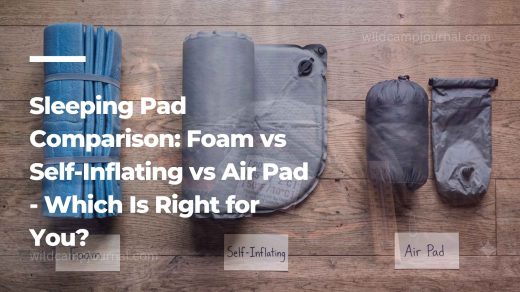
Step 2: Lay your sleeping pad down first. A sleeping pad is not optional with a bivy sack. The bivy provides no insulation from ground cold. Your sleeping bag compresses under your body weight just as it does on the ground anywhere else, and without a pad, cold transfers directly through the system. For the full guide on choosing the right pad, read our sleeping pad comparison.
Step 3: Place your sleeping bag on top of the sleeping pad. Lay the bag out fully before putting it inside the bivy.
Step 4: Slide the bivy over the sleeping bag and pad together. Push the foot end of the sleeping bag into the foot end of the bivy first, then work the fabric up over the rest of the bag. The sleeping pad slides in with the sleeping bag on most designs.
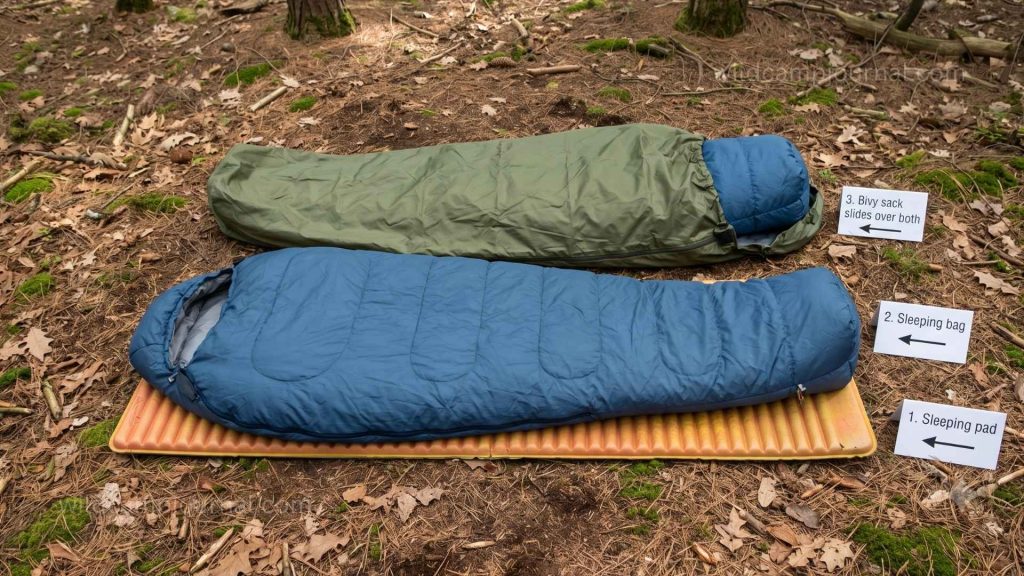
Step 5: Get inside the sleeping bag while inside the bivy. Adjust the head opening for the conditions. In clear weather, leave it open for ventilation. In rain or wind, close it to the required level of weather protection.
Want to see the full setup process in real conditions? This video walks through how to use a bivy sack from unpacking to getting inside correctly.
Can you use a bivy sack without a sleeping bag? In temperatures above 60 degrees Fahrenheit, a bivy used as a wind and insect barrier without a sleeping bag inside is viable for some campers. Below 60 degrees, the bivy adds insufficient warmth on its own and a sleeping bag is necessary.
Can you use a bivy sack inside a tent? Yes, and this is occasionally done in very cold conditions to add 5 to 10 degrees of effective warmth to a tent sleep system, or to protect the sleeping bag from condensation dripping from the tent interior. It is an uncommon use case but a legitimate one.
Bivy Sack vs Tent
| Factor | Bivy Sack | Tent |
|---|---|---|
| Weight | Under 1 lb | 1.5 to 4 lbs |
| Packed size | Fist to water bottle size | Large stuff sack |
| Setup time | Under 2 minutes | 5 to 25 minutes |
| Living space | None | Yes, varies by size |
| Weather protection | Good with tarp above | Built-in flysheet |
| Condensation risk | Higher | Lower |
| Insect protection | Mesh models only | Built-in on 3-season models |
| Terrain flexibility | Anywhere | Needs flat ground |
| Best conditions | Solo, alpine, fast travel | Multi-night, any terrain |
| Cost range | $30 to $350 | $80 to $600 |
| Amazon.com availability | Wide | Wide |
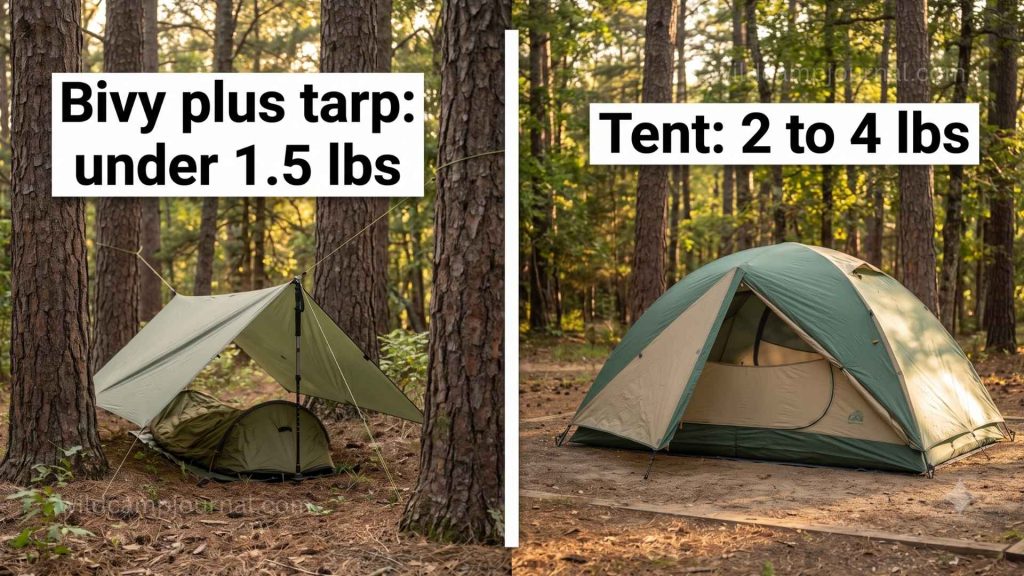
A bivy sack is not better or worse than a tent. It is a different tool for a different set of conditions and priorities. If you need living space, a place to cook sheltered from rain, or a secure enclosed space for children or a partner, a tent is the correct choice. If you camp solo, move fast, camp in locations where a tent footprint will not fit, or want the minimum possible shelter weight in your pack, a bivy sack paired with a tarp delivers everything you need at a fraction of the weight and bulk.
For most beginners, a tent remains the more forgiving and practical first shelter. A bivy sack is worth considering once you have established a camping routine and understand exactly what you are trading away in living space for what you gain in simplicity.
Our Top 5 Bivy Sack Picks
Pick 1 — Best Emergency Bivy
SOL Emergency Bivy
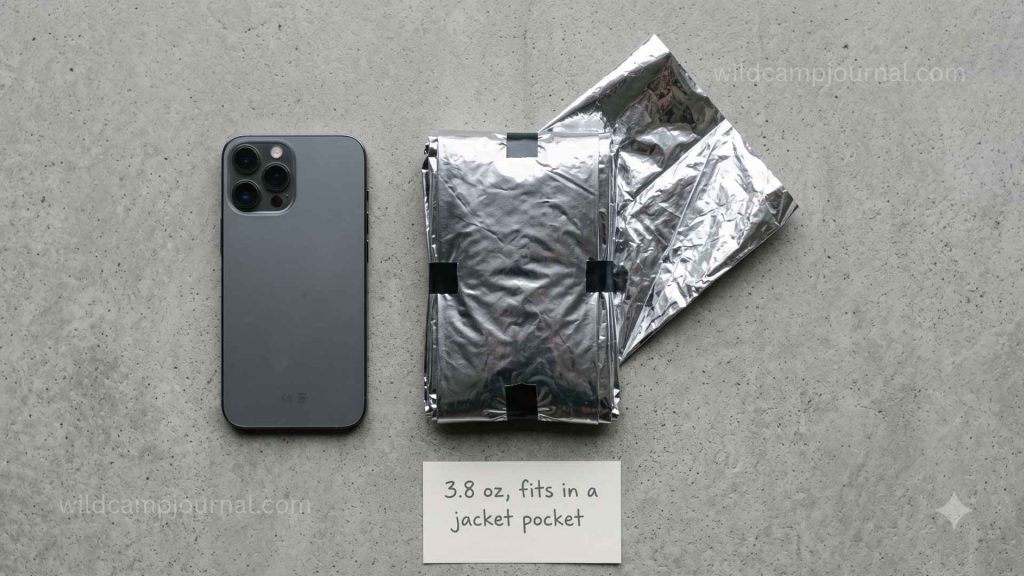
Price: $15 to $29 | Type: Emergency, aluminised film Weight: 3.8 oz | Packed size: Palm of hand Waterproof: Yes, non-breathable | Reusable: Limited
The SOL Emergency Bivy is the most widely carried emergency shelter in the US hiking community. The aluminised film reflects up to 90 percent of body heat back toward the sleeper. At 3.8 ounces it adds almost no weight to any pack. Every hiker, regardless of primary shelter type, should carry one of these as a backup. It is not a primary shelter for planned overnight camping. It is the item you reach for when something goes wrong.
Who it is right for: Every camper and hiker regardless of primary shelter type. This belongs in every pack as a backup, not as a primary bivy.

Type: Emergency, aluminised film
Weight: 3.8 oz
Packed size: Palm of hand
Waterproof: Yes, non-breathable
Reusable: Limited
Wondering how an emergency bivy actually performs in genuinely cold wet conditions? This real-world test shows exactly what to expect.
Pick 2 — Best Budget Bivy Sack
SOL Escape Lite Bivy

Price: $50 to $65 | Type: Standard waterproof, breathable Weight: 8.5 oz | Packed size: 4 x 5 inches Waterproof: Yes, breathable Escape fabric | Reusable: Yes, multi-season
The SOL Escape Lite is the clearest step up from a pure emergency bivy for campers who want a reusable, breathable, waterproof bivy without paying Gore-Tex prices. The Escape fabric is proprietary SOL breathable material that handles moisture better than mylar while still costing a fraction of Gore-Tex alternatives. It is heavier than pure ultralight options but far more practical as an entry-level planned camping bivy.
Who it is right for: Campers trying a bivy sack for the first time who want a proper breathable waterproof model at a price that does not require full commitment to the category.

Type: Standard waterproof, breathable
Weight: 8.5 oz
Packed size: 4 x 5 inches
Waterproof: Yes, breathable Escape fabric
Reusable: Yes, multi-season
Pick 3 — Best Ultralight Bivy Sack
MSR E-Bivy

Price: $90 to $110 | Type: Ultralight, waterproof breathable Weight: 8 oz | Packed size: Half a Nalgene bottle Waterproof: Yes, eVent fabric | Reusable: Yes, multi-season
The MSR E-Bivy is among the lightest fully waterproof bivies available on Amazon.com and has been a consistent recommendation from Trailspace and SectionHiker for summer and shoulder-season solo backpacking. The eVent fabric is highly breathable, making it one of the better performers for condensation management among non-Gore-Tex bivies. At 8 ounces and half a Nalgene bottle in packed size, it genuinely disappears into any backpacking kit.
Who it is right for: Weight-conscious backpackers who want a fully waterproof breathable bivy at minimum weight for summer and three-season use.

Type: Ultralight, waterproof breathable
Weight: 8 oz
Packed size: Half a Nalgene bottle
Waterproof: Yes, eVent fabric
Reusable: Yes, multi-season
Pick 4 — Best Overall Bivy Sack
Outdoor Research Helium Bivy
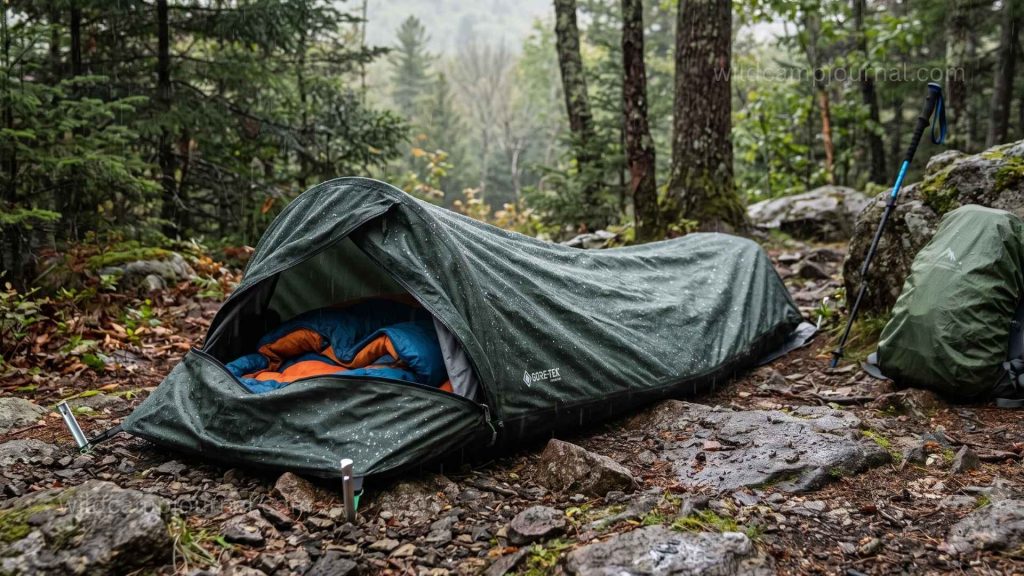
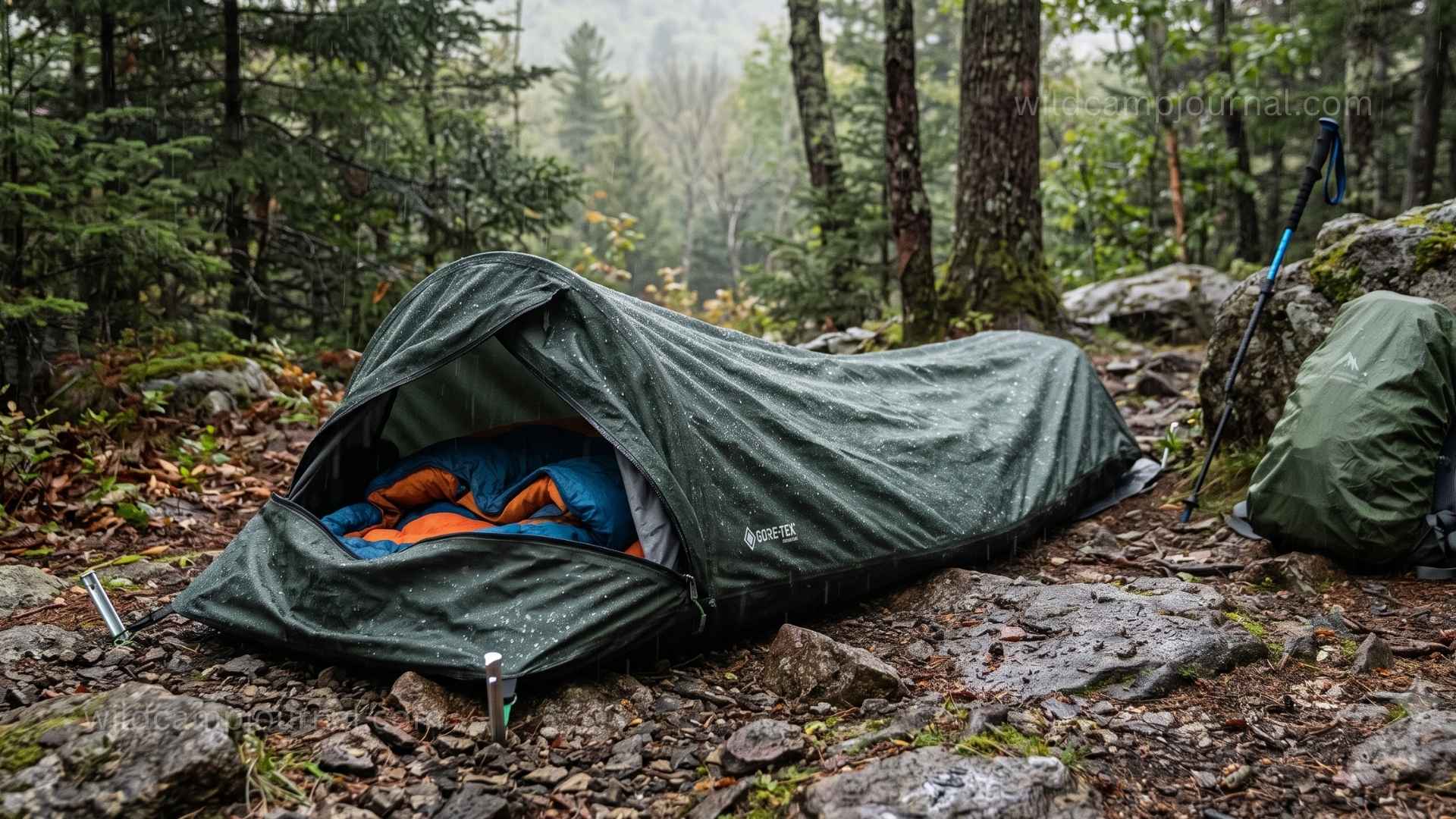
Price: $199 to $229 | Type: Standard waterproof, Gore-Tex Weight: 12.8 oz | Packed size: 5 x 4 inches Waterproof: Yes, Gore-Tex | Reusable: Yes, long lifespan
The Outdoor Research Helium Bivy is the most consistently recommended bivy sack across independent US review sources in 2026. OutdoorGearLab, SectionHiker, and REI Expert Advice all rate it as the top pick for most solo backpackers. The Gore-Tex fabric delivers class-leading breathability and waterproofing. Two diagonal pegging points at the corners allow the bivy to be staked out for better stability and airflow in wind. At 12.8 ounces it is heavier than ultralight alternatives but lighter than most hooped bivies.
Who it is right for: Backpackers who want the best-performing standard waterproof bivy available and are willing to pay a premium for Gore-Tex reliability and long-term durability.
Type: Standard waterproof, Gore-Tex
Weight: 12.8 oz
Packed size: 5 x 4 inches
Waterproof: Yes, Gore-Tex
Reusable: Yes, long lifespan
Pick 5 — Best Hooped Bivy Sack
Black Diamond Twilight Bivy
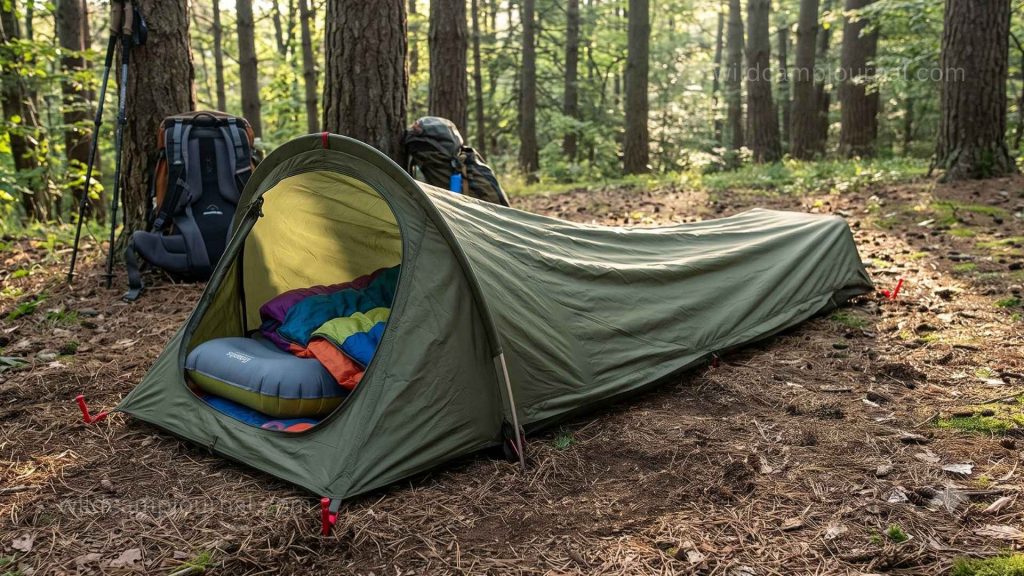
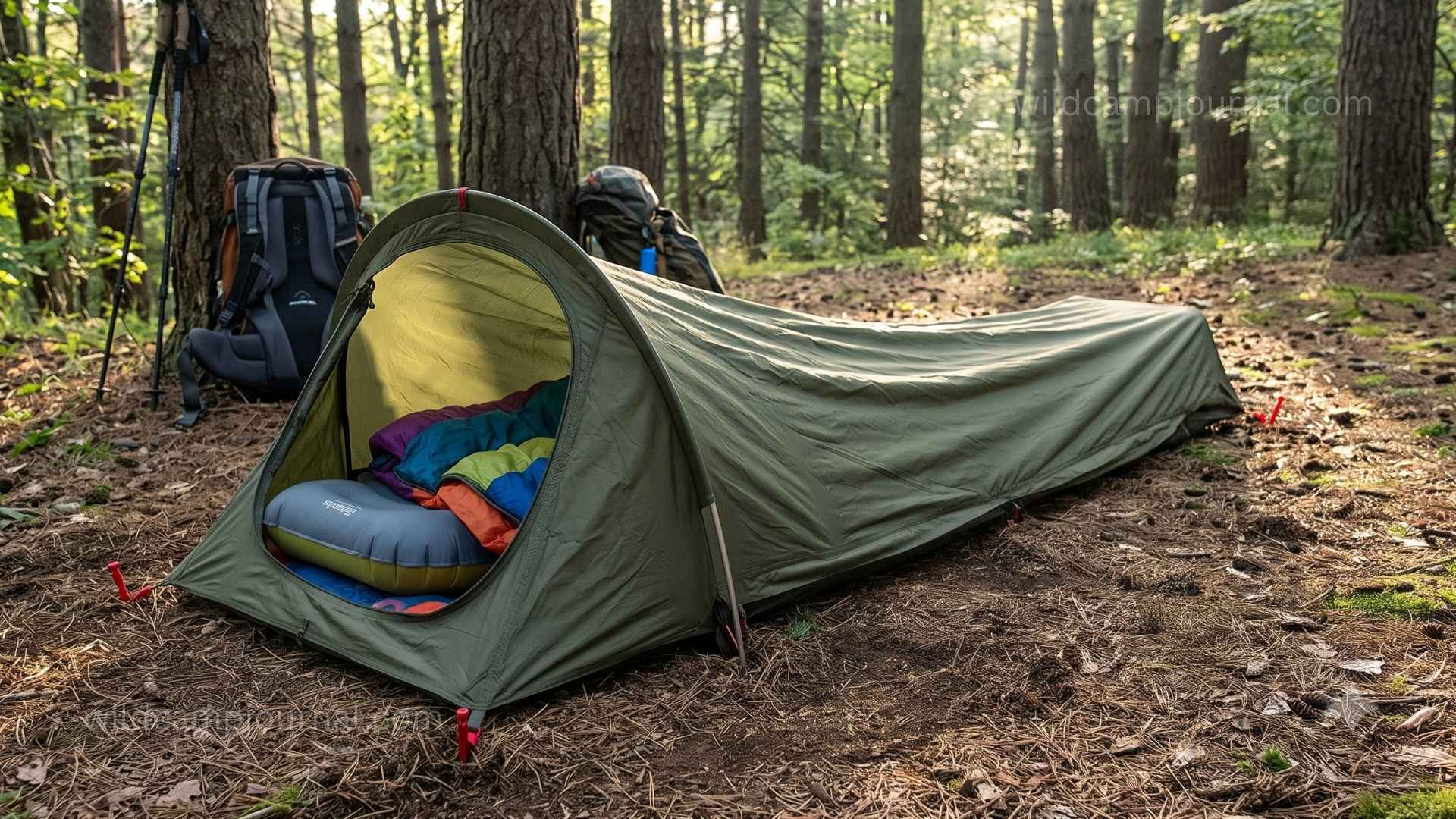
Price: $149 to $179 | Type: Hooped, waterproof breathable Weight: 1 lb 4 oz | Packed size: 6 x 5 inches Waterproof: Yes, BD.dry fabric | Reusable: Yes, multi-season
The Black Diamond Twilight Bivy is the clearest solution for campers who want bivy pack weight and setup speed but cannot tolerate the face-contact condensation issue of flat bivies. The aluminium hoop at the head end holds the fabric approximately four inches from the face, creating an air pocket that dramatically reduces the immediate condensation discomfort that causes most people to give up on flat bivies after one night. The BD.dry waterproof breathable fabric handles three-season conditions reliably. A single stakeout point at the foot stabilises the bivy in wind.
Who it is right for: Campers who have tried or are concerned about flat bivy claustrophobia and condensation discomfort, and want the comfort improvement of a hooped design at a mid-range price.
Type: Hooped, waterproof breathable
Weight: 1 lb 4 oz
Packed size: 6 x 5 inches
Waterproof: Yes, BD.dry fabric
Reusable: Yes, multi-season
Bivy Sack Comparison Table
Frequently Asked Questions
Are bivy sacks worth it?
For the right camper in the right conditions, yes. A bivy sack paired with a tarp gives a solo backpacker a complete weather-protection shelter system that weighs under 2 pounds combined and packs to almost nothing. For car campers, families, or anyone who values living space on a trip, a tent is a better investment. The value of a bivy sack is entirely dependent on how you camp.
Can you sleep in just a bivvy bag?
You can, but a bivy sack alone without a sleeping bag inside provides minimal warmth below 60 degrees Fahrenheit. The bivy adds only 5 to 10 degrees of effective warmth. In temperatures below that threshold, a sleeping bag rated to the expected overnight low is required inside the bivy. In warm summer conditions above 60 degrees, a bivy alone can function as a light insect and dew barrier.
Can you use a bivy sack inside a tent?
Yes. Some cold-weather campers use a bivy sack inside a tent to add 5 to 10 degrees of warmth to their sleep system and protect the sleeping bag from condensation dripping from the tent ceiling. It is an uncommon approach but a legitimate one for very cold conditions where tent camping is the primary shelter and extra warmth is needed without upgrading the sleeping bag.
What is the difference between a bivy bag and a sleeping bag?
A sleeping bag is an insulated bag that provides warmth. A bivy sack is an uninsulated waterproof shell that goes around the outside of a sleeping bag and provides weather protection. They are used together as a system, not as alternatives to each other. A bivy sack without a sleeping bag inside provides almost no warmth in cold conditions.
Can you use a bivy sack without a tarp?
In dry or clear conditions, yes. In sustained rain, a flat bivy sack can keep you dry but the condensation from being fully sealed inside for a long wet night becomes increasingly uncomfortable. A tarp rigged above the bivy allows the head opening to stay partially open in rain, which significantly improves ventilation and reduces condensation while the tarp handles the overhead weather. For most three-season camping, a bivy plus tarp is a more practical system than a bivy alone. For full tarp setup instructions, read our tarp shelter guide.
Conclusion
What is a bivy sack? It is a waterproof shell around your sleep system, not a tent, not a sleeping bag, and not a survival bag. It adds weather protection, wind blocking, and a small amount of warmth to a sleeping bag, at the cost of all living space and with a real condensation challenge in cold or humid conditions.
For solo campers who travel fast, camp in tight spaces, or want the minimum possible shelter weight, a bivy sack paired with a tarp is one of the most efficient overnight systems available. For everyone else, a tent remains the more comfortable and versatile choice.
If you are buying your first bivy, start with the SOL Escape Lite to understand the category before committing to a premium model. If you already know you will use one regularly, the Outdoor Research Helium Bivy is the most field-tested recommendation across independent 2026 sources.