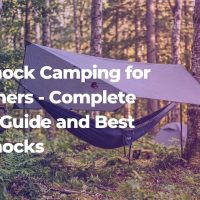
Hammock camping solves two problems that make tent camping uncomfortable for a lot of people: finding flat ground and sleeping on a hard surface.
Instead of laying a tent on whatever the ground gives you, you hang between two trees, adjust the angle until it feels right, and sleep suspended above everything. No rocks under your sleeping pad. No roots under your hip. No searching the campsite for a level patch of earth.
Table of Contents
The catch is that hammock camping has a learning curve most beginners underestimate. The wrong hang angle, no insulation underneath, or a missing tarp can make your first night genuinely miserable. This guide removes that learning curve entirely.
You will learn exactly what gear you need, how to set up your hammock correctly from day one, how to stay warm and dry overnight, how to camp without trees if needed, and which hammock to buy.
Prefer to watch first? This video follows a first-time hammock camper through a complete woodland setup from scratch.
What Is Hammock Camping and Is It Right for You?
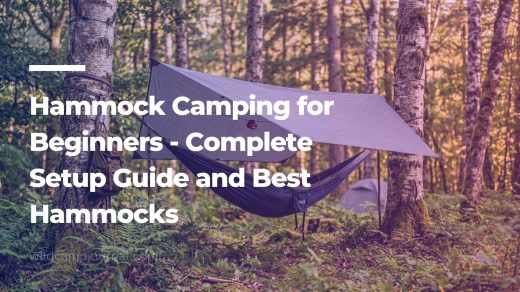
Hammock camping means using a suspended hammock as your primary shelter instead of a ground tent. You hang between two trees using straps, add a tarp overhead for rain protection, and insulate underneath to manage the cold air that circulates below you.
It is a genuinely different camping experience from tent camping and it suits some campers much better than others.
Hammock camping works well if you:
- Camp in woodland or forested areas where suitable trees are available
- Struggle to find flat or rock-free ground at your campsites
- Want a lighter shelter system than most tents
- Camp in spring, summer, or autumn with the right insulation for the conditions
- Want faster site setup once you have practiced the hang
Hammock camping is not the right choice if you:
- Camp in open terrain without trees: desert, high alpine, open meadow, or beach
- Camp in winter without a purpose-built underquilt and winter sleeping bag
- Camp with young children who need an enclosed, safe sleeping space
- Use campsites that specifically prohibit hammock hanging
If you are still deciding between a hammock and a tent, read our family tent vs backpacking tent guide for a direct comparison of both shelter approaches.
Hammock Camping Gear List – What You Need Before You Start
Most hammock camping problems come from missing gear, not bad gear. Here is every item you need for a complete overnight hammock setup.

The Hammock
Length. Buy an 11-foot hammock for overnight sleeping, not a 9-foot model. In a 9-foot hammock there is not enough material to lie diagonally without your head and feet pressing against the gathered ends. In an 11-foot hammock you have the space to spread out properly. Many beginner campers buy a cheap 9-foot hammock, sleep badly for two nights, and conclude that hammock camping does not work for them. The hammock was fine. The length was wrong.
Width. Always buy a double-width hammock for sleeping. Single hammocks wrap tightly around you like a cocoon. Double hammocks give you room to shift position, lie diagonally, and sleep through the night without feeling restricted.
Weight capacity. Choose a hammock with a minimum 400-pound weight capacity regardless of your body weight. The extra margin accounts for dynamic loading when you get in and out, which places significantly more force on the anchor points than simply lying still.
Material. 70D nylon is the most common and most durable material for camping hammocks. It holds up to regular use, dries quickly, and resists abrasion from tree bark and rough handling. 30D nylon is lighter but less durable. For beginners, 70D nylon is the right choice.
Tree Straps
Most hammocks do not include tree straps. Always check before buying and add straps to your order if they are not included.
Why straps and not rope. Rope and thin cord concentrate load into a narrow line on the tree bark, cutting into it and damaging the cambium layer underneath. Straps distribute the load across a wider surface. Most established campsites and all national parks require straps with a minimum width of 1 inch. Leave No Trace guidelines recommend 1.5 inches or wider.
Daisy chain straps vs flat straps. Daisy chain straps have loops sewn at regular intervals along their length, allowing you to adjust the hang height and angle without untying anything. Flat straps are simpler but require more adjusting to get the angle right. For beginners, daisy chain straps make the setup process significantly faster and easier.
Rain Protection
A tarp is required for overnight hammock camping. It is not optional.
A hammock has no overhead cover. Rain falls directly onto the fabric and onto you unless a tarp is rigged above. Even in good weather forecasts, a tarp gives you options if conditions change overnight.
What size tarp for hammock camping? A 9×9-foot tarp is the minimum for a single hammock with adequate coverage on both sides. For taller campers over 6 feet or for camping in exposed locations with wind-driven rain, a 10×10-foot tarp provides better protection. Hex-cut tarps designed specifically for hammock camping are shaped to cover the hammock ends more efficiently than square tarps. The full setup process is covered in the rain protection section below.
Bug Protection
Do you need a bug net for hammock camping? In summer and in any area with mosquitoes, gnats, or no-see-ums, yes. A hammock without a bug net in a buggy environment makes sleep nearly impossible. Your options are a separate bug net that hangs from the ridgeline over the hammock, or a hammock with an integrated bug net built into the design. Integrated nets are more convenient but add cost. Separate nets are cheaper and more versatile across different hammocks.
Insulation
Do you need a sleeping pad for hammock camping? Or an underquilt? You need one of the two for any night below 60 degrees F. Cold air circulates underneath your hammock and your sleeping bag compresses beneath you, losing its insulating ability just as it does on the ground. Without insulation underneath, you will sleep cold regardless of how warm your sleeping bag is rated. The full insulation guide is covered in the insulation section below.
Gear Storage at Camp
With no tent floor, your gear needs a home. Use a waterproof dry bag for anything you do not want to carry into the hammock with you. Hang the dry bag from the ridgeline or from a separate line strung between the same trees. Most hammocks include a small gear loft pocket inside for a headlamp, phone, or water bottle. Keep heavy items in a dry bag on the ground rather than inside the hammock, as the extra weight and movement affects how the hammock hangs.
Where to put your backpack when hammock camping. Hang it from the tree strap or ridgeline above the ground. This keeps it off wet ground, reduces condensation on the fabric, and in bear country keeps it accessible for a bear hang setup. Never leave food inside a backpack on the ground in bear habitat.
How to Set Up a Hammock Step by Step
Step 1: Choose the Right Trees
Look for two living trees with trunks at least 8 inches in diameter, roughly the width of a dinner plate. Smaller trees flex under load and may not hold safely. Dead trees or trees with significant lean should be avoided as anchor points.
Space: ideal tree spacing is 12 to 15 feet apart. Closer than 10 feet makes the hang angle too steep. Further than 18 feet and your straps may not reach with enough length to adjust.
Before hanging anything, look up. Check for dead branches, widow-makers, or any overhead material that could fall during the night. A dead branch that looks small from the ground can cause a serious injury if it falls on a hammock sleeper.
Step 2: Attach the Straps
Wrap each strap around the tree at approximately 5 to 6 feet off the ground. This starting height gives you room to lower the final hang to the right sleeping height. Use the daisy chain loops to choose an attachment point on each strap. Leave enough strap length so the hammock body hangs with a comfortable curve when attached.
Never use rope directly on tree bark. Use straps of at least 1 inch width. If your campsite has specific rules about hammock hanging, check them before setup.
Step 3: Hang at the Correct 30 Degree Angle
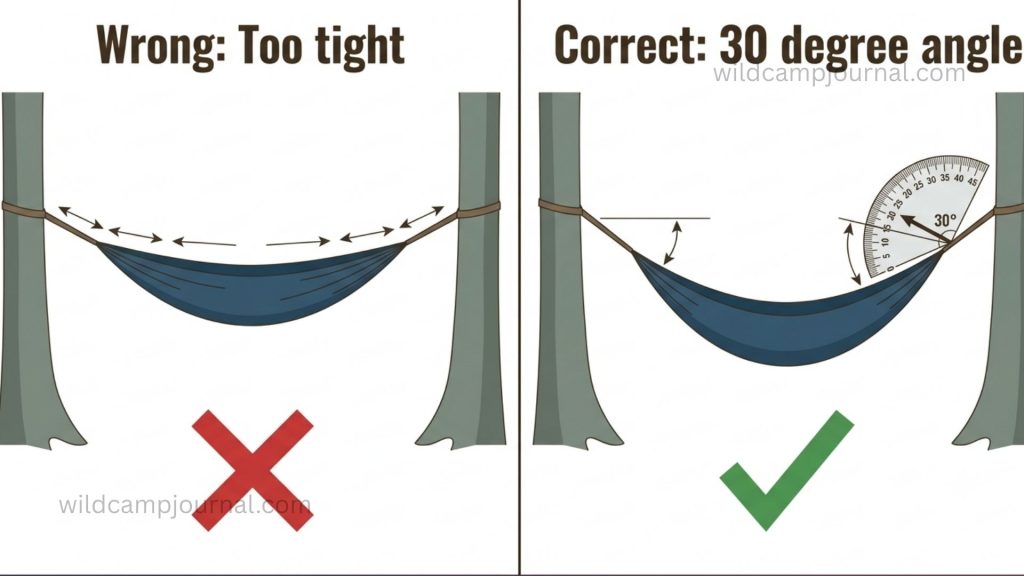
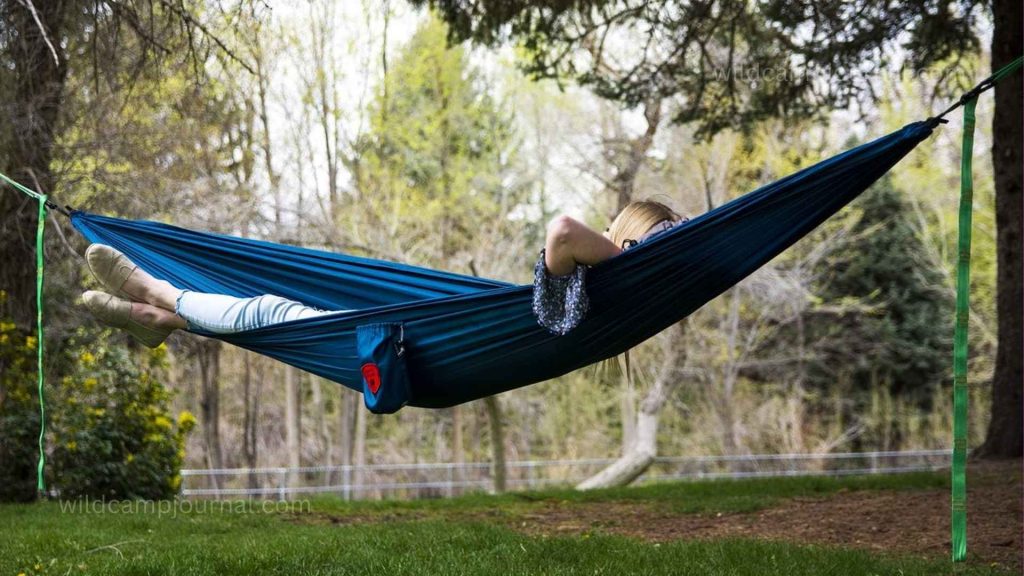
The most common beginner mistake is hanging the hammock too tight, like a trampoline. This creates the banana shape that causes back pain and makes diagonal lying uncomfortable.
The correct angle: the strap between the hammock end and the tree should form a 30 degree angle with the ground. A simple way to check this without measuring: hold your arm out straight in front of you, then tilt it down slightly. That tilt is approximately 30 degrees. The strap should match that angle.
At 30 degrees, the hammock body will have a visible and comfortable sag. It will look loose before you get in. That sag is correct. Too tight causes back pain. Too loose and the hammock sags to the ground under your weight and the straps may slip down the tree.
Still not sure about the hang angle? This video demonstrates the correct technique alongside common mistakes so you can see exactly what to aim for.
Step 4: Set the Final Height
When someone is lying in the hammock, the lowest point of the hammock body should sit approximately 18 inches off the ground. Set the height before you get in by sitting on the edge and checking clearance. Adjust the daisy chain attachment point up or down until the height is correct.
Hanging higher is not safer. A lower hang reduces the risk and severity of injury if a strap fails. Keep it at 18 inches.
Step 5: Use the Diagonal Lay
This is the single most important technique for comfortable hammock sleeping and the one most beginners miss.
Lying straight along the length of the hammock puts your body into a curved banana shape that strains your back. Shifting your body diagonally at approximately 30 degrees off the hammock centreline flattens the sleeping surface so your back is straight. Once you find the diagonal position, the hammock transforms from a curved sling into something close to a flat bed.
Experiment with the diagonal angle before your first overnight. A few inches of adjustment makes a significant difference in comfort.

What If There Are No Trees?
If your campsite has no suitable trees, you have three options.
A hammock stand is a freestanding metal or wooden frame that provides two anchor points without trees. Hammock stands are heavy and bulky but work well for car camping at open campsites. Most are rated for the same weight as the hammock itself.
Trekking poles can act as vertical uprights for a low-clearance hammock setup in conjunction with guylines staked into the ground. This is a more technical setup and not recommended for first-time campers.
A vehicle can serve as one anchor point if the hammock is specifically rated for vehicle attachment and the vehicle is parked on solid, level ground. Check your vehicle’s tow hitch or roof rack rating before attempting this.
The straightforward advice: if your campsite regularly lacks trees, a hammock is not the right primary shelter for you. A lightweight backpacking tent gives you the flexibility to sleep anywhere regardless of what the terrain provides.
Rain Protection – How to Set Up a Hammock Tarp
Why You Always Need a Tarp
A hammock provides zero overhead protection. Mist, drizzle, and full rain all reach you directly if nothing is rigged above. A tarp changes this completely.
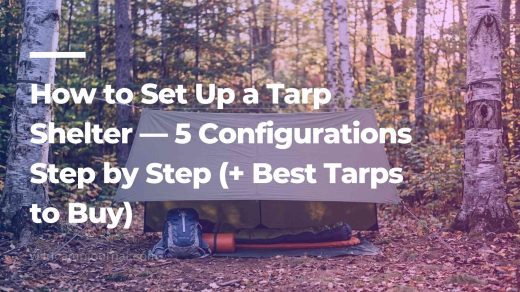
For a full step-by-step guide to tarp configurations and rigging techniques, read our tarp shelter setup guide. The following covers the hammock-specific setup only.
Still prefer to watch the tarp rigging process? This video shows the complete tarp and ridgeline setup over a hammock in real conditions.
Setting Up the Tarp Over a Hammock
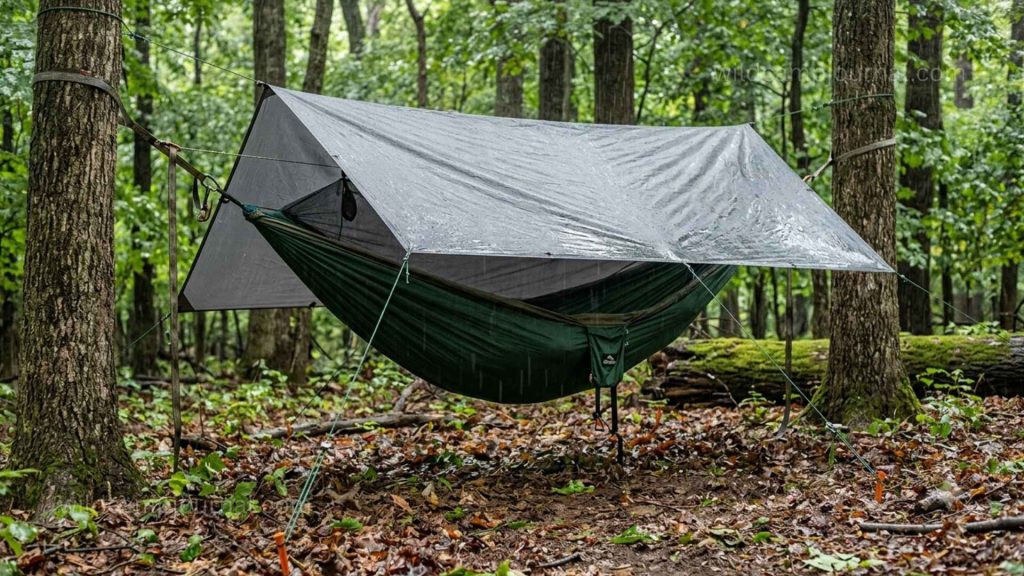
Tie a ridgeline between the same two trees used for the hammock, positioned 12 to 18 inches above the hammock body. The ridgeline should be at least as long as the hammock. Drape the tarp over the ridgeline with equal coverage on both sides. Stake the four tarp corners out at 45 degree angles away from the hammock.
Lower the windward side of the tarp closer to the ground to block driving rain. In heavy rain, the tarp edges should extend at least 18 inches beyond the hammock ends to prevent rain from blowing in from the sides.
For a 9×9-foot tarp, the coverage on each side of the ridgeline is approximately 4.5 feet. For most single hammocks this is sufficient in moderate rain. In heavy or wind-driven rain, a 10×10-foot tarp provides noticeably better protection.
Insulation – How to Stay Warm in a Hammock
Why Hammocks Run Colder Than Tents
A hammock exposes all sides of your sleeping system to moving air. A tent creates an enclosed space where your body heat builds up and raises the ambient temperature inside. This is why hammocks feel noticeably colder than tents in similar conditions and why insulation underneath is non-negotiable for anything below 60 degrees F.
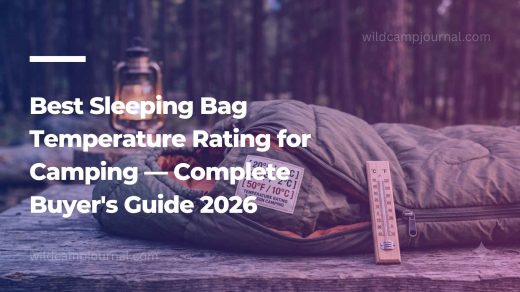
Your sleeping bag also compresses under your body weight inside a hammock, just as it does on the ground, losing the insulating ability of the compressed insulation. Without a pad or underquilt to replace that lost warmth, your sleeping bag underperforms its rated temperature significantly. We covered this in detail in our sleeping bag temperature rating guide and our sleeping pad comparison guide.
How Cold Is Too Cold for Hammock Camping?
With a proper insulation system, there is no lower temperature limit for hammock camping. Experienced hammock campers sleep below 0 degrees F in the right gear. For beginners, attempting hammock camping below 20 degrees F without a full underquilt and a winter-rated sleeping bag is not advisable.
The practical limit for beginners using basic insulation: above 30 degrees F with a sleeping bag rated 10 degrees below the expected low. Below 30 degrees F, you need a dedicated underquilt.
Three Insulation Options
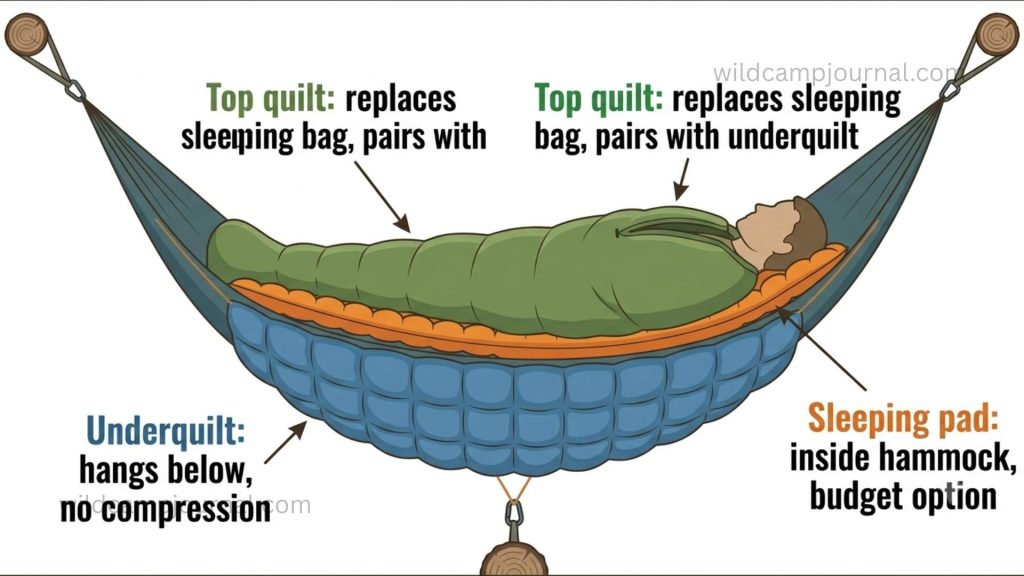
Underquilt: An underquilt hangs beneath the hammock body and insulates the underside without compression. It is the most effective insulation solution for hammock camping because it maintains full loft regardless of your body weight. An underquilt rated to the expected overnight low is the correct approach for serious three-season or cold-weather hammock camping.
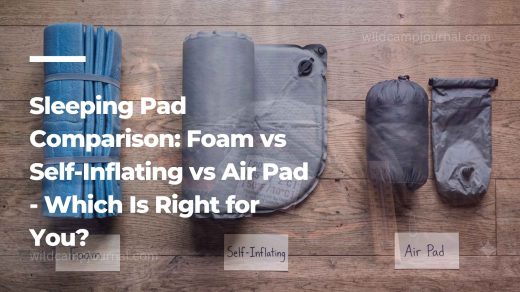
Sleeping pad inside the hammock: A foam or inflatable sleeping pad placed inside the hammock below your sleeping bag provides insulation from underneath. It is cheaper than an underquilt and works adequately above 35 to 40 degrees F. The main limitation is that pads slide around inside a hammock and affect the diagonal lay, requiring repositioning during the night. For summer camping a pad is a practical budget alternative to an underquilt.
Top quilt: A top quilt replaces the sleeping bag and pairs with an underquilt for a complete hammock-specific sleep system. It is lighter than a sleeping bag because it removes the back panel that compresses uselessly beneath you anyway. Top quilts are a step up in the system and not required for beginners starting out.
Temperature Guide for Hammock Insulation
| Overnight Low | Insulation Required |
|---|---|
| Above 60 degrees F | Sleeping bag or top quilt only, no underinsulation needed |
| 40 to 60 degrees F | Sleeping pad inside hammock plus sleeping bag |
| 30 to 40 degrees F | Light underquilt plus sleeping bag rated to the low |
| 20 to 30 degrees F | Full underquilt plus sleeping bag rated 10 degrees below the low |
| Below 20 degrees F | High-rated underquilt plus winter sleeping bag, full system required |
For help choosing the right sleeping bag temperature rating to pair with your hammock, read our sleeping bag temperature rating guide.
Is Hammock Camping Safe?
Hammock camping is safe when set up correctly. The risks that exist are predictable and avoidable.
Weight limits. Never exceed the weight capacity printed on your hammock. Dynamic loading when entering and exiting the hammock places more force on the anchor points than your resting weight. Always buy to a 400-pound minimum capacity.
Tree health. Hang only from living trees with trunks at least 8 inches in diameter. Dead standing trees may look solid but can fail without warning. Always inspect the trunk for cracks, rot, or fungal growth before hanging.
Overhead hazards. Look up before you hang. Dead branches above a hammock are the most commonly overlooked hazard in hammock camping. A branch that falls overnight onto a hammock sleeper is rare but serious.
Bear country. Hammock camping in bear country requires the same food storage discipline as tent camping. Hang your food bag separately from your hammock using a proper bear hang or a bear canister. Do not leave food or scented items in your hammock or backpack on the ground. The smell of food in a hammock does not attract bears more than in a tent. Your food storage habits determine your risk level, not your shelter type.
Rain and lightning. Never hammock camp under a lone tree or the tallest tree in an open area during a lightning risk. Choose trees within a dense canopy that are not elevated above surrounding terrain.
Hammock vs Tent Camping – Honest Comparison
| Factor | Hammock | Tent |
|---|---|---|
| Setup time | Faster once practiced | Slower, more components |
| Ground requirement | No flat ground needed | Flat, clear ground required |
| Weight | Lighter than most tents | Variable, generally heavier |
| Insulation | Colder without underquilt | Warmer from enclosed space |
| Weather protection | Needs separate tarp | Built-in flysheet |
| Tree requirement | Yes, two suitable trees | No trees needed |
| Bug protection | Needs separate net | Built-in on most 3-season tents |
| Terrain versatility | Limited to forested areas | Works on any terrain |
| Cost as a complete system | Similar to a mid-range tent once you add tarp and net | Variable, single purchase covers most needs |
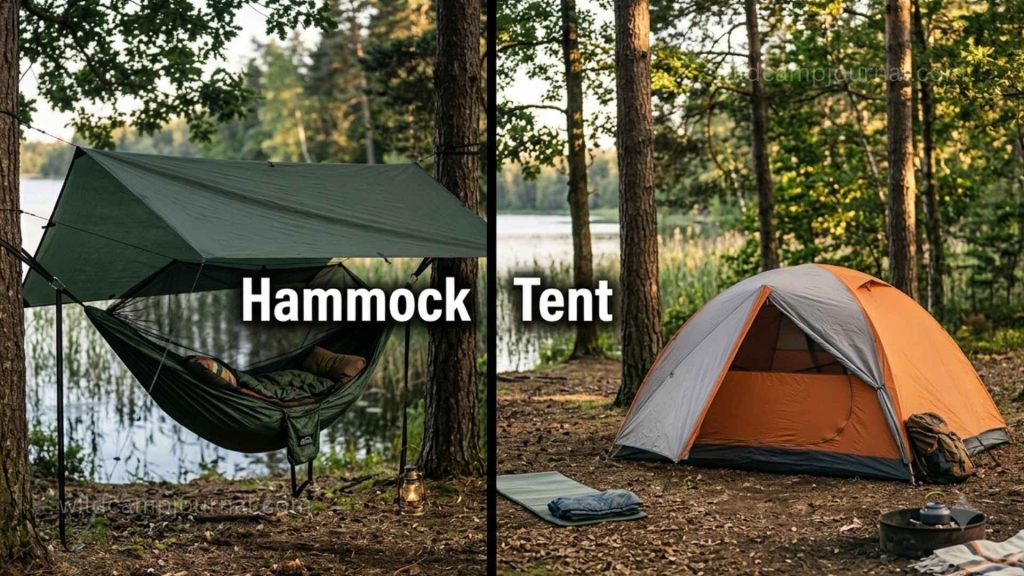
Hammock camping is not better than tent camping. It is different and it suits specific conditions. If you consistently camp in woodland with uneven ground and you sleep alone or with one partner, a hammock removes your biggest comfort problem. If you camp on open terrain, in winter without proper gear, or with children, a tent is the more practical and versatile choice.
Our Top 5 Hammock Picks for Beginners
All five picks are verified available on Amazon.com as of June 2026 and recommended across independent US review sources including CleverHiker, Outdoor Life, and Treeline Review.
Pick 1 — Best Complete Beginner Kit
Wise Owl Outfitters Camping Hammock
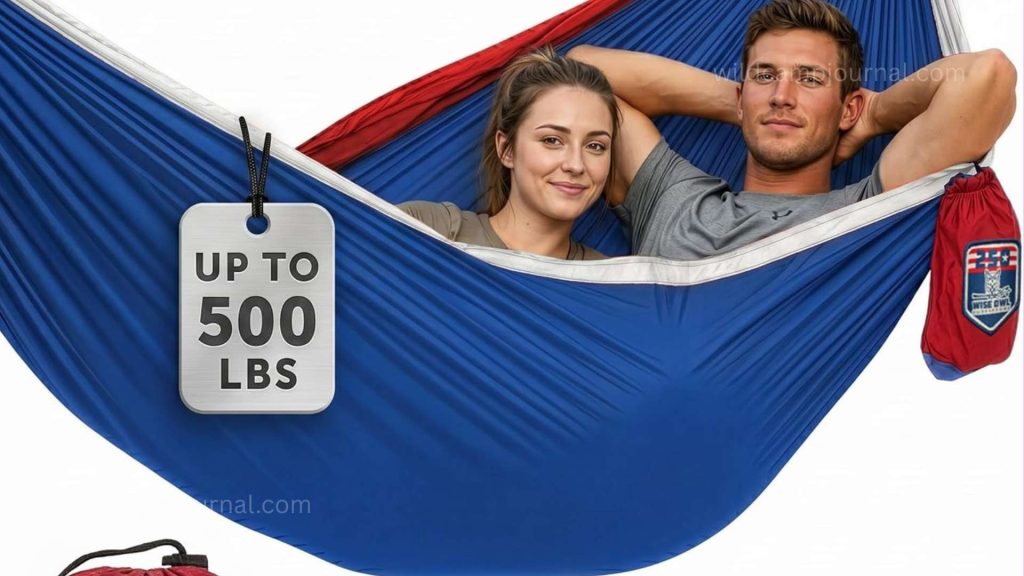
Price: $30 to $40 | Length: 10 feet | Material: 210T parachute nylon Weight capacity: 500 lbs | Weight: 1 lb | Straps included: Yes
The Wise Owl Outfitters hammock is the clearest recommendation for beginners on Amazon.com for one reason: it includes tree straps and carabiners in the box. Most competing hammocks at this price ship without straps, turning a $35 hammock into a $70 purchase once you add them separately. Wise Owl eliminates that surprise. The 210T parachute nylon is comfortable and durable for regular use. The hammock comes in single and double sizes. Always buy the double for sleeping.
Who it is right for: Any beginner buying their first camping hammock who wants a complete working kit without hidden additional costs.

Length: 10 feet
Material: 210T Parachute Nylon
Weight Capacity: 500 lbs
Weight: 1 lb
Straps included: Yes
Pick 2 — Best Overall
ENO DoubleNest Hammock

Price: $65 to $75 | Length: 9 feet 6 inches | Material: 70D nylon taffeta Weight capacity: 400 lbs | Weight: 19 oz | Straps included: No
The ENO DoubleNest is easily the most straightforward camping hammock to hang, with clear instructions, a wide design, and durable fabric according to Outdoor Life’s field testing in 2026. The 70D nylon taffeta is noticeably more durable than the thinner parachute nylon used on budget alternatives, and the fabric’s feel and breathability are consistently praised across independent reviews. Note that the DoubleNest is 9 feet 6 inches long. For most campers this works well for lounging and shorter overnight trips. Taller campers over 6 feet should consider the ENO JungleNest for the additional length.
Who it is right for: Campers who want the most proven and most recommended camping hammock available and are willing to add straps separately.

Length: 9 feet 6 inches
Material: 70D nylon taffeta
Weight capacity: 400 lbs
Weight: 19 oz
Straps included: No
Pick 3 — Best Two-Person Hammock
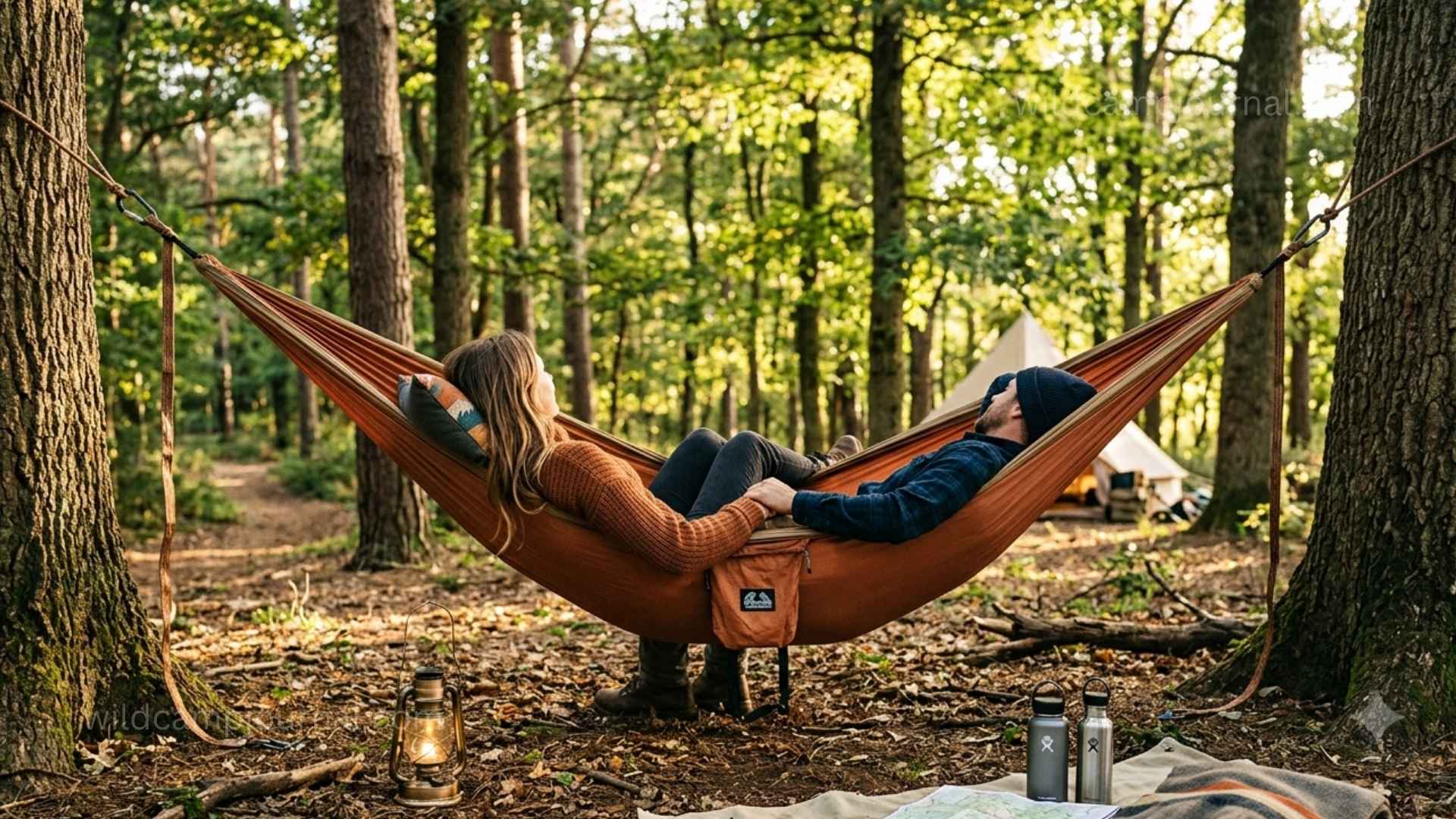
Kammok Roo Double Hammock
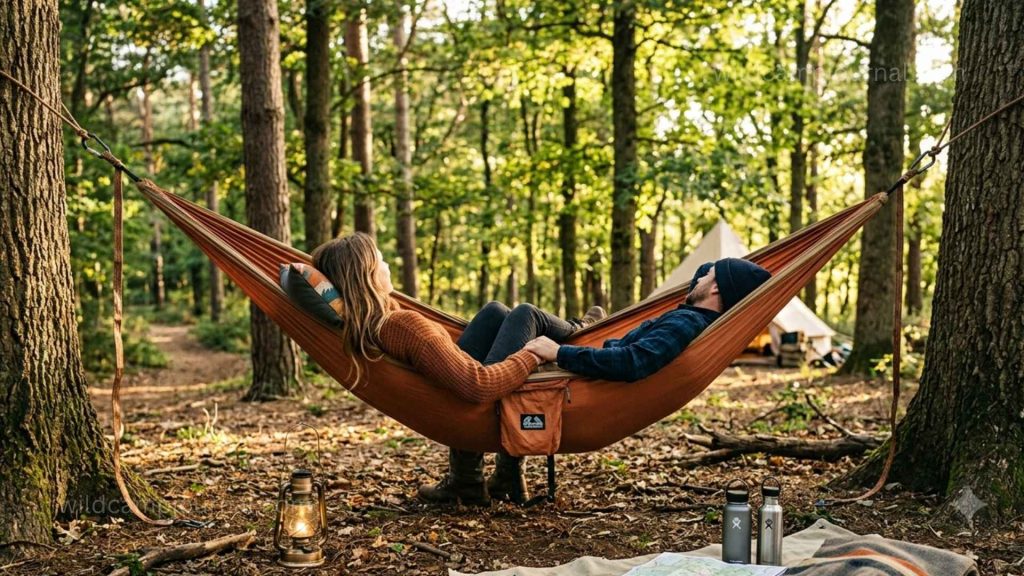
Price: $90 to $110 | Length: 11 feet | Material: LunarWave ripstop nylon Weight capacity: 500 lbs | Weight: 1 lb 3 oz | Straps included: No
The Kammok Roo Double features a thoughtful design with solid features that make it easy to set up in minutes and provides peace of mind when suspended above the ground. The LunarWave diamond-weave ripstop nylon feels silkier and less plastic than standard nylon hammocks and holds up extremely well to extended outdoor use. At 11 feet it is the longest pick in this guide and the most comfortable for taller campers. The 500-pound capacity handles two adults comfortably. CleverHiker’s June 2026 update includes it as a top pick for comfort and material quality.
Who it is right for: Couples camping together who want the most comfortable two-person hammock available, or solo campers who are over 6 feet tall and want the extra length.
Length: 11 feet
Material: LunarWave Ripstop Nylon
Weight Capacity: 500 lbs
Weight: 1 lb 3 oz
Straps included: No
Pick 4 — Best Bug Protection
Grand Trunk Skeeter Beeter Pro Hammock
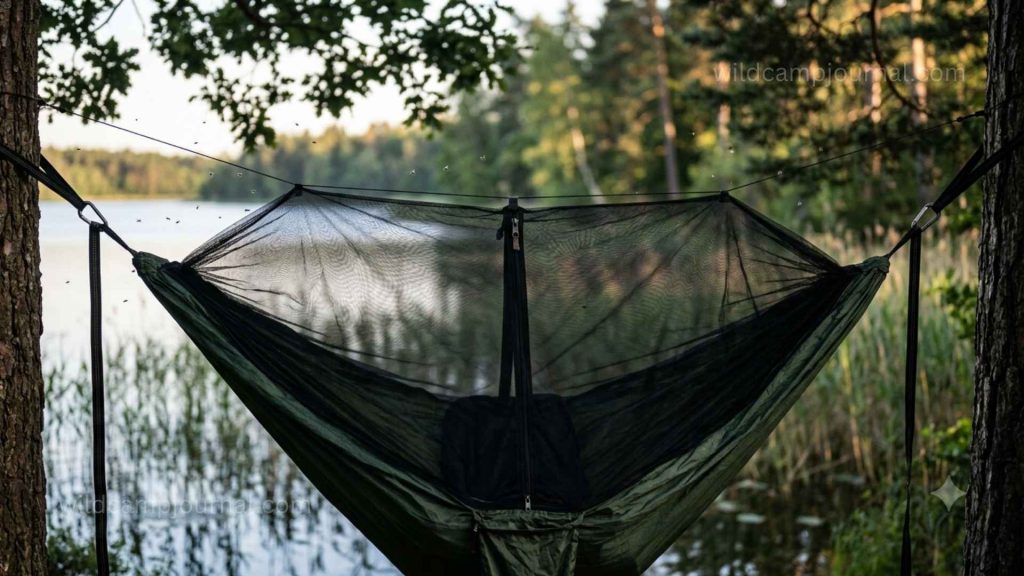
Price: $70 to $90 | Length: 10 feet | Material: 70D nylon Weight capacity: 400 lbs | Weight: 2 lbs | Straps included: No
The Grand Trunk Skeeter Beeter Pro has a built-in no-see-um mosquito net sewn directly onto the hammock, providing a bug-free shelter where you hang up, unzip the net, climb in, and are completely protected. For camping near lakes, rivers, or in deep woodland where insects are a serious problem, an integrated bug net eliminates the separate purchase and the setup complexity of a net that hangs independently. The net can be flipped over and used as a standard hammock in low-bug environments.
Who it is right for: Campers who primarily camp near water or in insect-heavy woodland environments and want built-in bug protection without managing a separate net.

Length: 10 feet
Material: 70D nylon
Weight capacity: 400 lbs
Weight: 2 lbs
Straps included: No
Pick 5 — Best Budget
Grand Trunk Ultralight Starter Hammock
Price: $30 to $40 | Length: 9 feet 6 inches | Material: Calendared ripstop nylon Weight capacity: 300 lbs | Weight: 5.2 oz | Straps included: No
At 5.2 ounces the Grand Trunk Ultralight Starter is lighter than most stuff sacks and comes with a lifetime warranty against manufacturer defects and normal wear and tear, making it the lowest-risk way to try hammock camping. At 300-pound capacity it is the lowest-rated pick in this guide. Buy it only if you are under 200 pounds and want the absolute cheapest entry point to try hammock camping before committing to a higher-quality system. If you like hammock camping after one or two trips, replace this hammock with an 11-foot double-width model and keep the straps.
Who it is right for: Campers who have never tried a hammock and want to spend the minimum possible amount to test whether hammock camping suits them before investing in a full system.

Length: 9 feet 6 inches
Material: Calendared ripstop nylon
Weight capacity: 300 lbs
Weight: 5.2 oz
Straps included: No
Hammock Picks Comparison Table
| Wise Owl Outfitters | ENO DoubleNest | Kammok Roo Double | Grand Trunk Skeeter Beeter | Grand Trunk UL Starter | |
|---|---|---|---|---|---|
| Price | $30 to $40 | $65 to $75 | $90 to $110 | $70 to $90 | $30 to $40 |
| Length | 10 ft | 9.5 ft | 11 ft | 10 ft | 9.5 ft |
| Material | 210T nylon | 70D nylon | LunarWave ripstop | 70D nylon | Ripstop nylon |
| Capacity | 500 lbs | 400 lbs | 500 lbs | 400 lbs | 300 lbs |
| Weight | 1 lb | 19 oz | 1 lb 3 oz | 2 lbs | 5.2 oz |
| Straps included | Yes | No | No | No | No |
| Bug net | No | No | No | Yes, integrated | No |
| Best for | Complete beginner kit | Best overall | Two-person or tall campers | Buggy environments | Budget trial |
| Amazon.com | Add to Cart | Add to Cart | Add to Cart | Add to Cart | Add to Cart |
Frequently Asked Questions
What is the correct angle for a hammock?
The suspension straps between the hammock ends and the trees should form a 30 degree angle with the ground. This angle creates the right amount of sag in the hammock body for comfortable sleeping. A common way to check it: hold your arm straight out in front of you and tilt it slightly downward. That is approximately 30 degrees. Hanging too tight creates a banana shape that strains your back. Hanging too loose causes the hammock to sag to the ground under your weight.
Can you sleep on your side in a hammock?
Yes, but the diagonal lay technique is required. Lying straight along the hammock centreline curves your body and makes side sleeping uncomfortable. Shifting your body diagonally at 30 degrees off the centreline flattens the sleeping surface. In that position, side sleeping works well in a wide double hammock. Narrow single hammocks do not provide enough width for comfortable side sleeping regardless of technique.
Does sleeping in a hammock cause back pain?
Back pain from hammock sleeping is almost always caused by hanging the hammock too tight. A hammock strung taut like a trampoline forces the body into a curved position that strains the lumbar spine. The fix is a 30 degree hang angle that allows a visible sag in the hammock body, combined with the diagonal lay technique. Campers who apply both of these consistently report no back pain from hammock sleeping.
Where do you put your gear when hammock camping?
Hang a waterproof dry bag from the ridgeline or from a separate line strung between your anchor trees. Small items like a headlamp, phone, and water bottle go in the hammock’s gear loft pocket if one is included. Keep your backpack hung from the tree strap off the ground to protect it from moisture and wildlife. In bear country, hang your food bag separately from your sleep setup using a proper bear hang at least 200 feet from your hammock.
How long does a camping hammock last?
A quality 70D nylon camping hammock lasts 5 to 10 seasons of regular use with proper care. Avoid leaving the hammock in direct sunlight for extended periods when not in use, as UV exposure degrades nylon over time. Clean with mild soap and cold water and allow to air dry completely before storing. Store loosely rather than compressed to preserve the fabric’s integrity. Budget ripstop nylon hammocks typically last 2 to 4 seasons under the same conditions.
Conclusion
Hammock camping rewards the campers who take time to learn the setup correctly before their first overnight. The hang angle, the diagonal lay, the tarp position, and the insulation underneath are the four things that determine whether you sleep well or spend the night uncomfortable.
Get those four things right and hammock camping delivers something tent camping rarely does: a genuinely comfortable night’s sleep without the usual ground-related problems.
Set up your hammock in the garden before your first trip. Find the 30 degree angle. Practise the diagonal lay. Rig the tarp. Ten minutes of practice at home is worth three hours of problem-solving at a campsite after dark.