Let’s be honest: with over 63 million of us hitting the trails each year, the wilderness has a massive poop problem. Improperly buried human waste and toilet paper are now the most common forms of backcountry pollution. The scale is actually pretty shocking on Mount Denali’s Kahiltna Glacier alone, an estimated 88 metric tons of human excrement are currently sitting in crevasses and slowly leaching E. coli into the meltwater.
It might be an awkward topic, but knowing how to properly go to the toilet outside is one of the most crucial wilderness skills you can learn.
Table of Contents
If you want to know how to go to the toilet when wild camping safely, hygienically, and responsibly, you must master the art of backcountry sanitation.
Why Proper Backcountry Sanitation Matters
Unlike the scat of wild herbivores, human feces is packed with processed foods and harmful pathogens, including Giardia, Cryptosporidium, and E. coli.
If you poop too close to a watershed, heavy rain or snowmelt can wash these pathogens directly into streams and lakes, contaminating drinking water for both wildlife and fellow campers.
Furthermore, standard toilet paper does not vanish overnight; it can take one to three years to fully biodegrade in the wild.
The Golden Rules of How to Go to the Toilet When Wild Camping

Before discussing the specific methods of waste disposal, every wild camper must memorize the foundational guidelines of Leave No Trace (LNT) Principle 3: Dispose of Waste Properly.
- The 200-Foot Rule: You must always travel at least 200 feet (approximately 70 to 80 adult paces) away from any water source, trail, or campsite before relieving yourself.
- Finding the Perfect Spot: Location speeds up decomposition. Look for loose, dark, and organic soil, as it is rich in the microorganisms needed to break down feces.
- Seek the Sun: Whenever possible, choose a sunny spot (especially in the desert). The sun’s heat penetrates the soil and accelerates the destruction of pathogens.
Essential Gear: Building Your Ultimate “Poop Kit”

Having a dedicated, easily accessible bathroom kit in your backpack is essential.
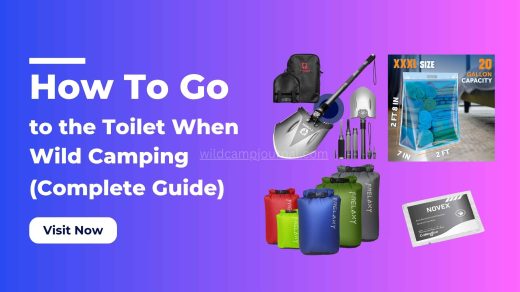
- A Lightweight Trowel: A small camp shovel (like the ultralight aluminum Deuce 2) is mandatory for digging properly sized holes. See price here.
- Unscented Toilet Paper: Use single-ply, unperfumed toilet paper, as it breaks down the fastest. See price here.
- Opaque Ziploc Bags: You will need sealable bags to pack out your used toilet paper and wet wipes. See price here.
Pro Tip: Line your Ziploc bag with aluminum foil or wrap the outside in duct tape so you don’t have to look at your dirty waste while hiking.
- Biodegradable Soap and Hand Sanitizer: Bring >60% alcohol hand sanitizer and an eco-friendly soap (like Dr. Bronner’s). See price here.
- Specialized Gear: Pack a WAG bag for emergencies, and consider a portable bidet or an antimicrobial pee cloth (like the Kula Cloth) to eliminate toilet paper usage entirely.
Three Main Methods for How to Go to the Toilet When Wild Camping
Method 1: Digging a Cathole (The Standard Backcountry Approach)

If you are in an environment with rich, organic soil, burying your waste is the most widely accepted method.
- Dig the Hole: Use your trowel to dig a hole 6 to 8 inches deep and 4 to 6 inches wide. If it is too shallow, animals will dig it up; if it is too deep, the lack of oxygen stops decomposition.
- Assume the Position: Squat over the hole.
- Create “Poop Soup”: After defecating, use a sturdy stick to thoroughly mix the waste into the soil at the bottom of the hole. This introduces dirt microbes directly into the waste, drastically speeding up decomposition.
- Cover and Camouflage: Fill the hole completely with the excavated dirt, tamp it down with your foot, and cover the spot with natural debris like leaves and pine needles to disguise it.
| Pros | Cons |
| Highly effective natural decomposition | Not permitted or effective in rocky, alpine, or desert environments |
| Utilizes inexpensive gear | Requires physical effort and time to dig properly |
| Keeps waste completely out of sight |
Watch this excellent field demonstration by Leave No Trace on exactly how to dig a proper cathole and position yourself comfortably.
Method 2: Packing It Out with WAG Bags

In fragile environments where soil cannot decompose waste (arid deserts, high alpine zones, winter snow, and narrow river canyons), you must pack your solid waste out.
- Use a WAG Bag: A WAG (Waste Alleviating Gel) bag is a puncture-resistant double-bag system. The inner bag contains a NASA-developed powder that instantly gels the waste, neutralizes odors, and kills pathogens.
- Seal and Store: Poop directly into the inner bag, drop in your toilet paper, tie it off, and seal it securely inside the outer ziplock bag.
Pro Tip: For multiday trips or big-wall climbing, build a “poop tube” out of a piece of PVC pipe with a sealed cap. Drop your used WAG bags inside the hard-sided tube to guarantee they will never get crushed or leak inside your backpack.
| Pros | Cons |
| The most environmentally friendly LNT method | Costs around $3.00 to $5.00 per bag |
| 100% prevents water contamination and pathogen spread | Requires you to carry the physical weight and bulk of your feces for days |
| Mandatory for high-traffic zones | Can be psychologically uncomfortable for beginners |
Method 3: Portable Toilets (For Motorhomes and Campervans)
If you are vehicle-based off-grid, you must carry a self-contained toilet.
- Composting Toilets: Separate liquids from solids. You sprinkle natural materials (like sawdust or coconut coir) over the solids, which naturally breaks down the waste with zero odor and zero water.
- Cassette Toilets: Store waste in a removable tank beneath the bowl, which must be carried to a public municipal dump station to be emptied.
| Pros | Cons |
| Provides supreme comfort and privacy. | Requires frequent manual emptying. |
| Excellent for areas where outdoor toileting is strictly prohibited. | Traditional cassette toilets can smell and require chemical treatments. |
| Units take up significant vehicle space. |
How to Squat: Perfecting Your Form
Executing a comfortable squat is crucial to avoid losing your balance and stepping in your own mess.
- The Deep Squat: Plant your feet wide, pull your pants to your knees (not your ankles), and drop your hips low. Hold onto your trekking poles for superior stability.
- The Tripod (Tree Hug): Find a sturdy, slender tree trunk. Grip it tightly with both hands and lean back into a supported squat, placing your feet near the base of the tree.
- The Log Assist: Locate a fallen log or a large boulder. Sit on the edge, scoot backward, and hang your rear off the side while bracing yourself with your hands.
Wiping and Cleaning: Toilet Paper vs. The Backcountry Bidet

Always Pack Out Your Toilet Paper: Burying toilet paper is widely discouraged because animals dig it up and it takes years to degrade. Furthermore, wet wipes contain plastic fibers and are never biodegradable; they must always be packed out in your Ziploc bag.
Natural Alternatives: If you run out of TP, use smooth river stones, clean snowballs, or broad, non-toxic leaves (like mules ears).
Pro Tip: Thoroughly inspect any leaf before touching it to your most sensitive areas to ensure it is not poison ivy or stinging nettles.
The Backcountry Bidet (The Skurka Method): Popularized by wilderness expert Andrew Skurka, the backcountry bidet provides superior hygiene and eliminates chafing (monkey butt) without creating any paper waste.
- Use natural materials (sticks, smooth stones) to wipe away the bulk of the waste.
- Designate a “clean hand” and a “dirty hand”.
- Hold your drinking water bottle with your clean hand and loosen the cap to drizzle a steady stream of water down your backside.
- Reach back with your dirty hand and physically scrub the area clean with the water.
- Air dry, then use the water bottle as a makeshift faucet to rigorously wash both hands with biodegradable soap and sanitizer.
What to Use Instead of Toilet Paper in the Wild
Toilet paper takes months to decompose, and animals frequently dig it up. The absolute best practice is to pack out your used toilet paper in a sealed bag.
However, if you want to avoid toilet paper entirely, you have a few excellent alternatives:
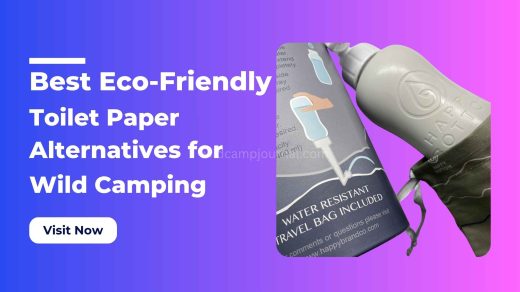
- A Backcountry Bidet: This is a small nozzle that attaches to standard water bottles, allowing you to wash yourself clean using a pressurized stream of water. Get the CuloClean Bidet from Amazon.
- Natural Materials: Large, smooth leaves, smooth river stones, or packed snow work incredibly well once you get used to them.
For a complete breakdown of what leaves are safe to use and the best bidet setups on the market, read our full guide on Eco-Friendly Toilet Paper Alternatives for Wild Camping.
How to Pee Outdoors
Liquid waste is less dangerous than solid waste, but strict rules still apply.
Where to Pee: Always move 200 feet from water. Aim for durable surfaces like rocks, pine needles, or gravel instead of green plants. Wildlife (such as mountain goats and deer) crave the salt found in human urine and will literally tear up the earth and destroy fragile vegetation to consume it.
Using an Antimicrobial Pee Cloth (e.g., Kula Cloth): For women and anyone who squats to pee, the “drip dry” method leaves residual moisture that causes chafing and Urinary Tract Infections (UTIs). An antimicrobial pee cloth solves this. You use the soft, silver-infused side to pat dry, while the waterproof backside keeps your hand totally clean.
Pro Tip: Snap the cloth to the outside of your backpack while you hike; the sun’s UV rays will naturally dry and sanitize the fabric.
Female Urination Devices (FUDs): Devices like the pStyle or SheWee act as funnels, allowing women to urinate standing up.
Pro Tip: If you don’t want to leave your tent during a freezing rainstorm in the middle of the night, combine a FUD with a designated wide-mouth “pee bottle”.
Managing Periods in the Backcountry
Having your period should never deter you from camping.
- Packing Out Tampons and Pads: You must never bury or burn tampons or pads. Animals will dig them up, and campfires rarely burn hot enough to incinerate them. Place all used menstrual products in your duct-taped Ziploc bag and pack them out.
- Using Menstrual Cups: Cups are an excellent zero-waste solution. They can be worn for 12 hours. To empty them, dig a standard 6-to-8-inch cathole, deposit the blood, rinse the cup with treated drinking water, and reinsert it.
Extreme Weather and Environments
- Winter and Deep Snow: Freezing temperatures completely stop the natural decomposition of waste. If you poop in the snow, the pathogens survive the winter, and when the snow melts in the spring, the raw waste will wash directly into the water supply. You must pack out all solid waste during winter camping.
- Deserts: Arid soils lack the moisture required for fast decomposition. If packing out is not mandated, maximize solar exposure by digging your cathole on a south-facing slope or ridge where the sun’s heat can kill the pathogens, and absolutely avoid dry sandy washes that flash-flood.
Frequently Asked Questions
How deep should you dig a cathole for human waste?
Dig a cathole 6 to 8 inches deep and 4 to 6 inches wide. This depth keeps waste hidden from animals and places it in the active, organic topsoil layer where microorganisms break it down the fastest.
What is the 200 rule for camping?
The 200 rule is a Leave No Trace principle requiring you to stay at least 200 feet away from lakes, streams, trails, and campsites when disposing of human waste or washing dishes to protect water quality and wildlife.
What do you do with toilet paper when wild camping?
The best practice is to pack out all used toilet paper and wet wipes in a sealed plastic bag. Toilet paper takes years to decompose and animals often dig it up, while wet wipes contain plastic and never fully break down.
What can I use instead of toilet paper in the wild?
You can use natural materials like smooth river stones, snow, or large non-toxic leaves. Alternatively, use a backcountry water bottle bidet for rinsing, or a reusable, antimicrobial pee cloth for urinating.
What is a WAG bag and when do you use it?
A WAG bag is a puncture-resistant, double-bag system with gelling powder that deodorizes and solidifies human waste. Use it to pack out feces in fragile zones where burial is banned, like deserts or alpine areas.
How do you deal with periods while wild camping?
Pack out all tampons, pads, and wrappers in a sealed, opaque trash bag; never bury or burn them. Alternatively, use a reusable menstrual cup, emptying the contents into a standard 6-to-8-inch cathole.
Conclusion: Mastering the Art of the Outdoor Bathroom
Going to the toilet when wild camping might seem intimidating or awkward at first, but just like pitching a tent, filtering water, or reading a map, it is simply another essential outdoor skill to master.
By planning ahead and assembling a dedicated “poop kit” equipped with a lightweight trowel, unscented toilet paper, hand sanitizer, and specialized gear like a WAG bag or an antimicrobial pee cloth, you can handle any wilderness emergency with confidence.
Always remember the golden rules of backcountry sanitation:
- Keep your distance: Always travel at least 200 feet (about 70 adult paces) away from water sources, trails, and campsites.
- Leave No Trace: Either properly bury your solid waste in a 6-to-8-inch deep cat hole where organic soil permits, or pack it out completely using a WAG bag in sensitive environments like deserts, alpine zones, or winter snow.
- Pack out your paper: Never leave toilet paper, wet wipes, or menstrual products behind, as they take years to decompose and can be dug up by wildlife.
Ultimately, proper wild camping hygiene isn’t just about your personal comfort; it is about protecting fragile ecosystems from harmful pathogens, keeping natural water sources clean, and preserving the pristine beauty of the outdoors for wildlife and every camper who follows in your footsteps.
So pack your trowel, respect the environment, and enjoy your next off-grid adventure with total peace of mind!