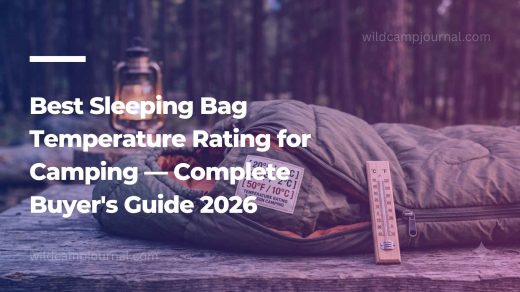
Buying a sleeping bag is not complicated once you understand one thing: the temperature rating printed on the label does not mean what most people think it means.
Most beginners buy a sleeping bag rated to 20 degrees, camp on a 25-degree night, and wake up cold. They blame the bag. The bag is doing exactly what it was designed to do. The problem is that they did not understand what the rating actually tells them before they spent their money.
Table of Contents
This guide fixes that. You will learn exactly what sleeping bag temperature ratings mean, how the ISO 23537 and EN 13537 testing standards work, which rating you need for each camping season, how men and women differ in cold sensitivity, what actually affects a bag’s real-world warmth, and which sleeping bags to buy across five temperature ranges and three budget levels.
By the end of this guide you will know precisely which sleeping bag temperature rating you need for your next camping trip and why.
Prefer to watch first? REI’s gear team explains exactly how sleeping bag temperature ratings are tested and what each number means in under 5 minutes.
What Do Sleeping Bag Temperature Ratings Mean?
A sleeping bag temperature rating is a number that tells you the lowest temperature at which the bag is designed to keep you alive or comfortable. The key word is “designed.” It is a laboratory result, not a guarantee.
All reputable sleeping bag manufacturers test their products using one of two international standards:
ISO 23537 is the current global testing standard used by most major brands selling in the US market. It replaced EN 13537 as the dominant standard, though both tests use the same methodology and produce comparable results.
EN 13537 was the European standard used before ISO 23537. You will still see this label on older bags and some European brands. The results are directly comparable to ISO 23537 ratings.
Both standards test sleeping bags the same way. A temperature-controlled laboratory chamber cools around an instrumented thermal manikin wearing base layers and lying inside the sleeping bag on top of a sleeping pad. Sensors measure how much energy the manikin needs to maintain its core temperature as the air cools. Those energy measurements translate into three temperature thresholds that appear on every properly rated sleeping bag.
Not every sleeping bag carries an ISO or EN rating. Brands like Western Mountaineering, Big Agnes, and Feathered Friends set their own temperature ratings in-house without third-party testing. That does not mean their bags are poor quality, but it means you cannot directly compare their ratings to ISO-rated bags from other manufacturers. When a bag’s listed rating is not stated as an ISO or EN result, treat it as an estimate, not a measured value.
The Three Temperature Numbers on Every Sleeping Bag
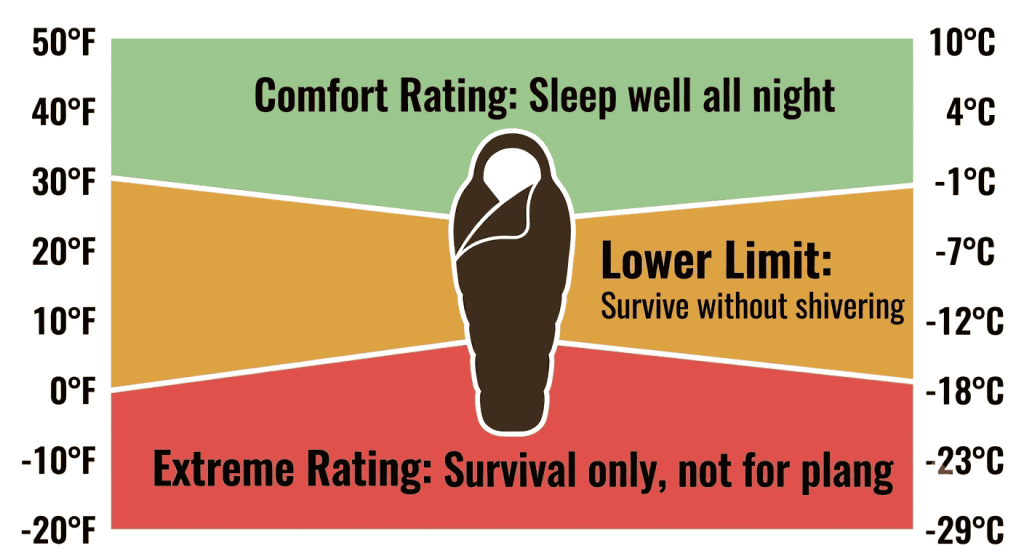
Every ISO-rated sleeping bag lists three numbers. Understanding the difference between them is the single most important thing in this entire guide.
Comfort Rating
The comfort rating is the temperature at which an average cold-sleeping woman can sleep through the night in a relaxed position without feeling cold. If you tend to sleep cold, always buy to your bag’s comfort rating, not the limit rating. This is the number that actually tells you whether you will sleep well.
Lower Limit Rating
The lower limit rating is the temperature at which an average warm-sleeping man can maintain thermal equilibrium in a curled position for eight hours. He will not be comfortable at this temperature, but he will not be in danger. Most sleeping bags are marketed and named using their lower limit rating, which is why beginners consistently buy bags that leave them cold. A bag sold as a “20 degree sleeping bag” will keep the average man alive at 20 degrees. It will not keep the average man or woman comfortable at 20 degrees.
Extreme Rating
The extreme rating is a survival figure. It is the temperature at which the bag provides just enough warmth to prevent a woman from dying of hypothermia over six hours. Frostbite is still possible at the extreme rating. Nobody should plan to sleep comfortably at their bag’s extreme rating. This number exists for emergency reference only, not for trip planning.
The Number That Actually Matters for Your Purchase
Buy your sleeping bag based on the comfort rating, not the lower limit rating. Then build in a 10 to 15 degree buffer below the coldest night you expect. If the overnight low at your campsite is forecast at 30 degrees, buy a bag with a comfort rating of 15 to 20 degrees. The buffer accounts for weather variation, wind chill inside a poorly insulated tent, and the fact that comfort ratings are averages across a population, not guarantees for every individual.
Which Temperature Rating Do You Need for Each Season?
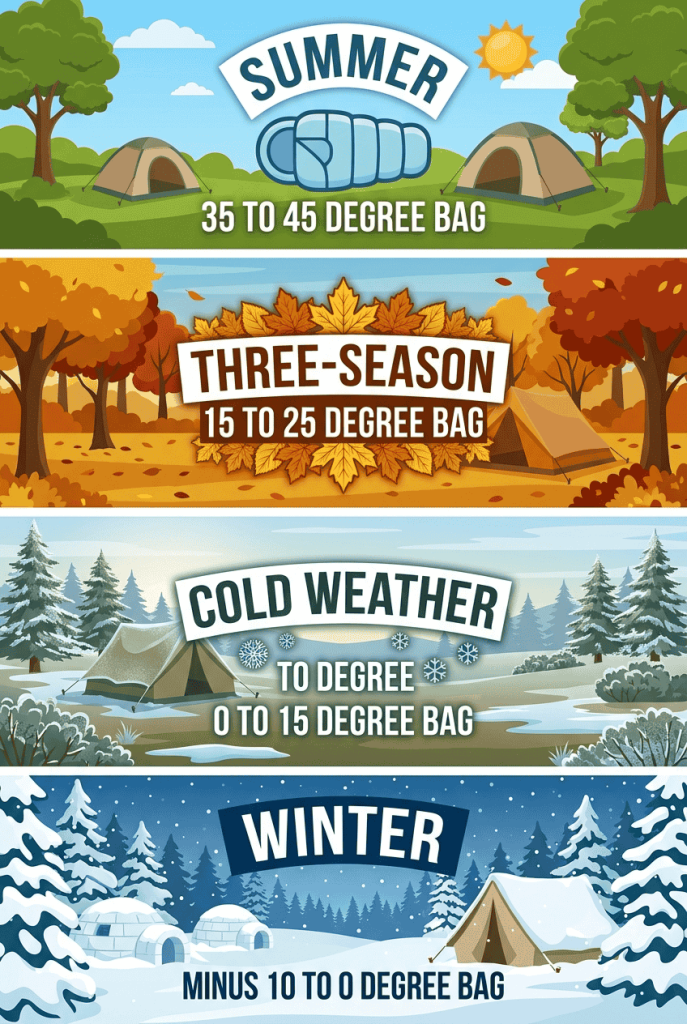
Use this section as your direct reference guide. Find your camping season or expected overnight low and match it to the correct rating.
Summer Camping (Overnight Lows 50 to 65 degrees F)
A bag with a comfort rating of 35 to 45 degrees handles most summer camping at lower elevations in the US. If you camp at higher elevations in summer where overnight lows regularly drop into the 30s, move down to a 20 to 30 degree comfort-rated bag. Summer bags above 40 degrees are only appropriate for warm climate camping where overnight temperatures stay reliably above 50 degrees. At higher elevations, a summer-only bag will leave you cold.
Three-Season Camping (Overnight Lows 25 to 50 degrees F)
A 20 to 30 degree comfort-rated bag covers the vast majority of spring, summer, and autumn camping across the continental US. This is the most versatile temperature range to own and the right starting point for most campers. A 20 degree bag handles cold spring and autumn nights and gives you a comfortable buffer on milder summer evenings.
Cold Weather Camping (Overnight Lows 10 to 25 degrees F)
A 0 to 15 degree comfort-rated bag handles late autumn through early winter camping in most US mountain and northern regions. At this temperature range, insulation quality matters significantly. Down-filled bags outperform synthetic bags in this range because of their superior warmth-to-weight ratio and compressibility.
Winter Camping (Overnight Lows Below 10 degrees F)
A bag rated 0 degrees or below is required for genuine winter camping. For sub-zero camping, use a bag rated at least 10 to 20 degrees below your expected overnight low. In these conditions, your sleeping pad’s R-value becomes as important as your bag’s temperature rating. A bag rated to 0 degrees on a pad with an R-value below 4 will not perform as tested.
Quick Reference Chart
| Season | Expected Overnight Low | Comfort Rating to Buy |
|---|---|---|
| Summer (low elevation) | 50 to 65°F | 35 to 45°F |
| Summer (high elevation) | 30 to 50°F | 20 to 30°F |
| Three-season | 25 to 50°F | 15 to 25°F |
| Cold weather | 10 to 25°F | 0 to 15°F |
| Winter | Below 10°F | -10 to 0°F |
Want to see how these ratings translate to real camping conditions? This video walks through each temperature range with practical examples.
Men vs Women: Why Temperature Ratings Differ
The ISO 23537 test uses different reference models for men and women because research consistently shows that the average woman sleeps colder than the average man. Women’s sleeping bags carry more insulation than comparable men’s bags, which means a women’s 20 degree bag and a men’s 20 degree bag do not provide the same warmth for the same person.
In practical terms:
Women who sleep cold should buy to the comfort rating and add a 10 degree buffer. A woman camping in 30 degree weather needs a bag with a comfort rating of around 15 to 20 degrees.
Men who sleep warm can sometimes use a bag rated closer to the expected overnight low, but building in a 10 degree buffer is still the safer approach.
Women who know they sleep warm can consider men’s bags or unisex bags, which are typically lighter and less expensive for the same temperature rating. Men who know they sleep cold should look at women’s bags or add a liner for extra warmth.
The most reliable approach for any camper regardless of gender: know whether you are a warm or cold sleeper before you buy. If you have never camped before, assume you sleep cold and buy conservatively.
What Actually Affects a Sleeping Bag’s Real-World Warmth
The ISO rating is a starting point, not a ceiling. Several real-world factors change how warm a bag actually performs in the field.
Your Sleeping Pad’s R-Value
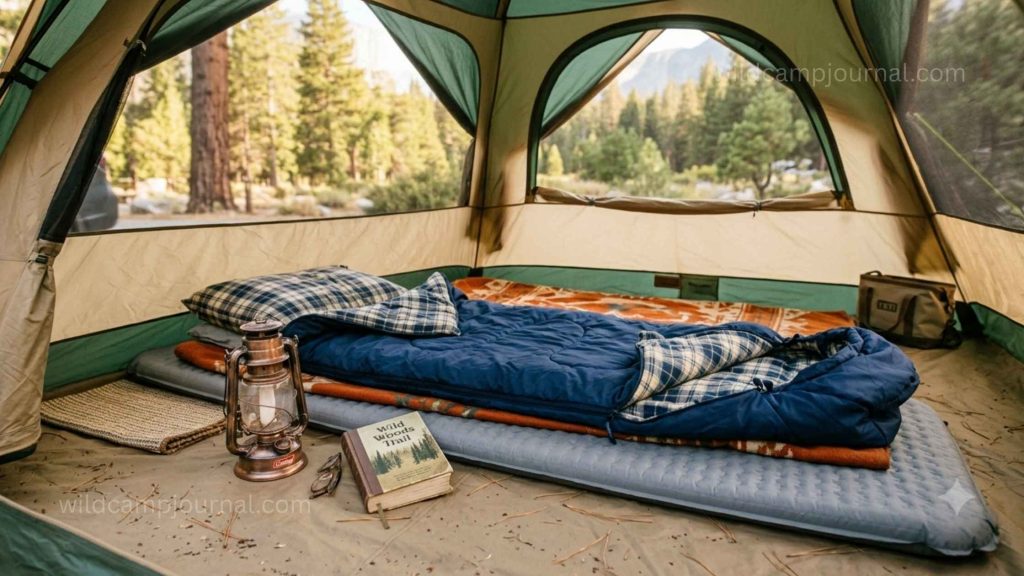
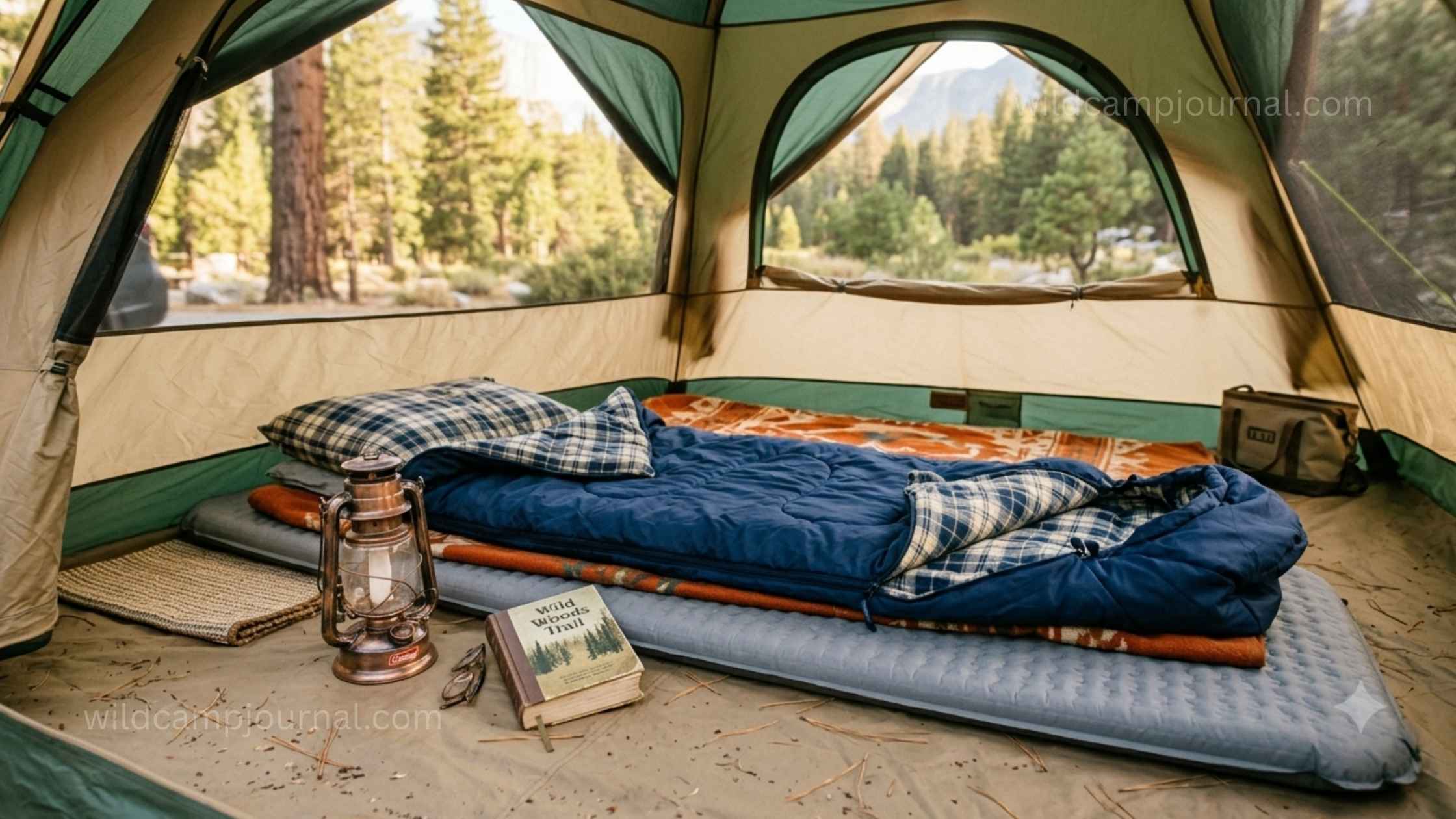
This is the most underestimated factor in sleeping bag performance. The ISO test places the bag on a sleeping pad because the ground conducts heat away from your body faster than cold air does. The portion of the bag beneath you compresses completely under your body weight and loses its insulating ability. Without a sleeping pad with adequate R-value, no sleeping bag performs to its rated temperature.
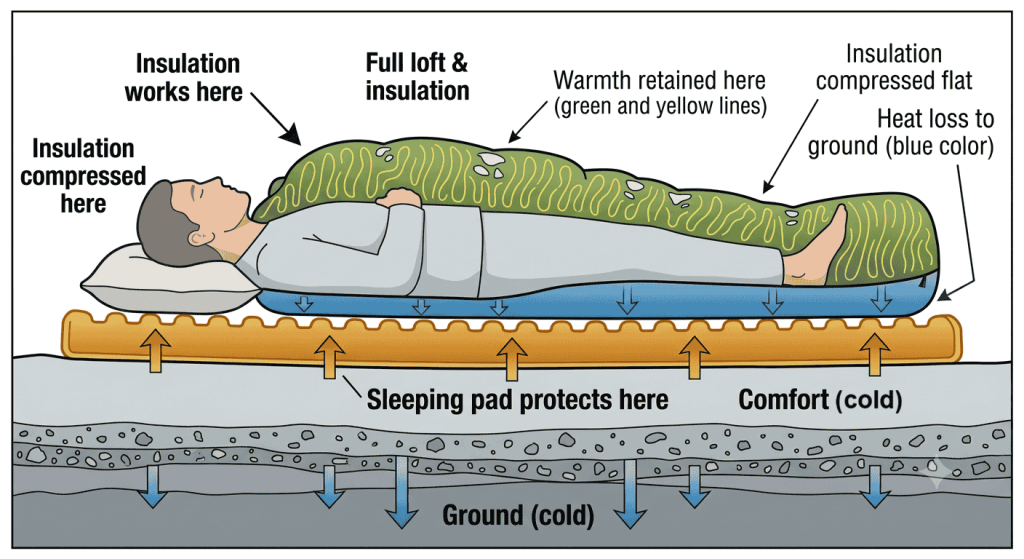
A general rule: match your sleeping pad’s R-value to your sleeping bag’s temperature rating. For a 20 degree bag used in three-season conditions, use a pad with an R-value of at least 3.5 to 4. For a 0 degree bag in winter conditions, use a pad with an R-value of at least 5 to 6.
Moisture and Humidity
Down insulation loses a significant portion of its warmth when wet. A down bag that gets damp from condensation inside a tent performs noticeably colder than its rating suggests. Hydrophobic down treatments reduce this problem but do not eliminate it. In wet climates or high-humidity conditions, a synthetic bag that retains warmth when damp outperforms an untreated down bag of the same rating.
Clothing Inside the Bag
Wearing a dry base layer inside your sleeping bag adds 5 to 15 degrees of effective warmth to any bag. A wool or synthetic hat adds additional warmth because significant body heat escapes through the head when the hood is loose. Wearing your insulation layers inside a bag that is slightly too cold for conditions is a reliable way to extend its effective temperature range by 10 degrees.
Food and Hydration
Your body generates heat by metabolising food. Eating a calorie-dense snack before sleep, particularly one with fat and carbohydrates, raises your core temperature and helps you sleep warmer. Being dehydrated reduces your body’s ability to generate heat efficiently. Drink adequate water throughout the day before any cold-weather camping night.
Age of the Bag
Sleeping bag insulation compresses permanently over time. A down bag stored compressed in a stuff sack for years will lose a meaningful amount of loft and insulating ability. A bag rated to 20 degrees when new may perform closer to 30 or 35 degrees after several years of compressed storage. Store sleeping bags loosely in a large cotton bag, never compressed, to preserve loft and insulating performance.
Down vs Synthetic Insulation: Which Temperature Rating Performs Better?
Insulation type does not change the temperature rating on the label. A 20 degree down bag and a 20 degree synthetic bag are both tested to the same standard. But how they achieve that rating and how they perform in real conditions differs significantly.
Down Insulation
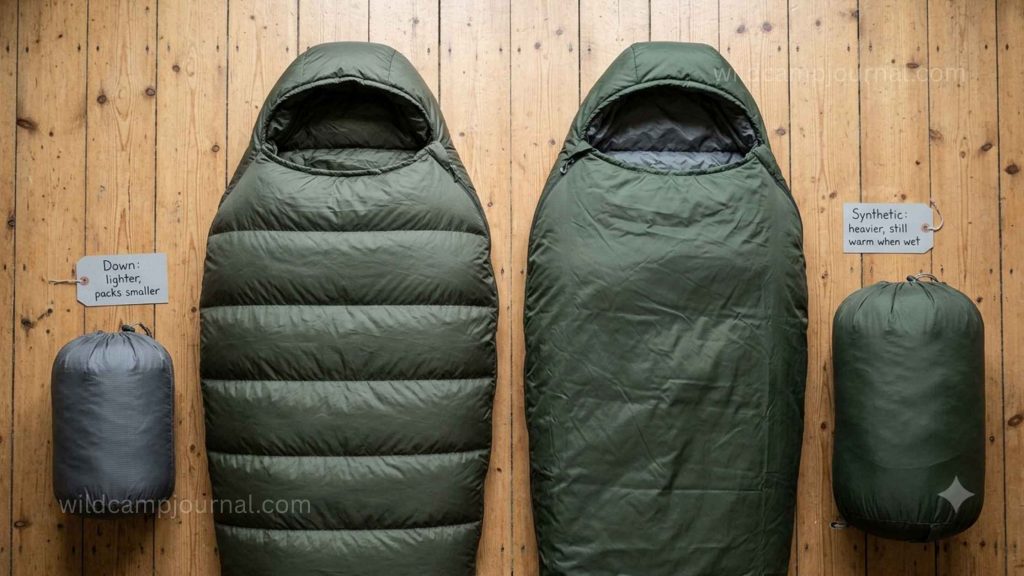
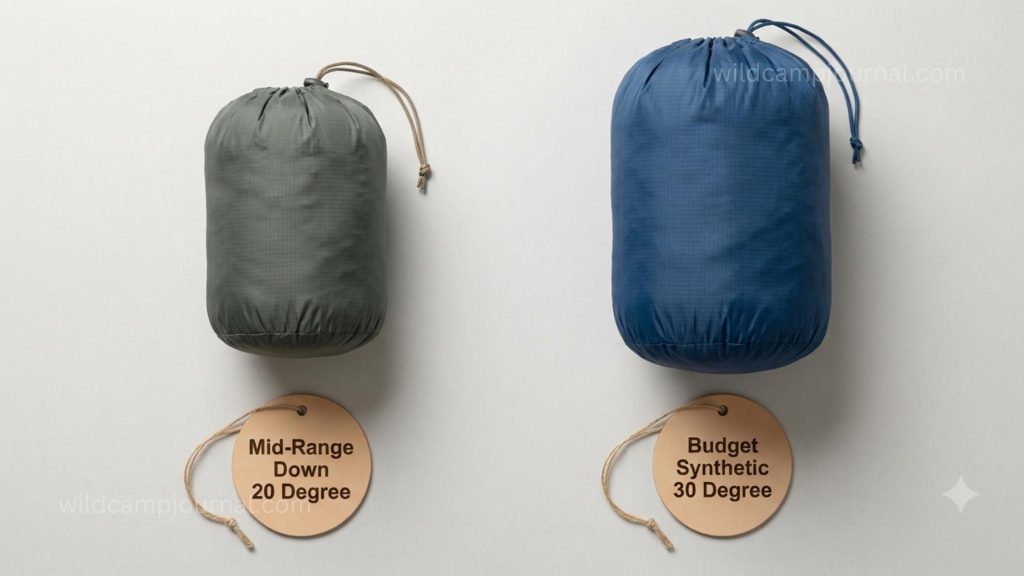
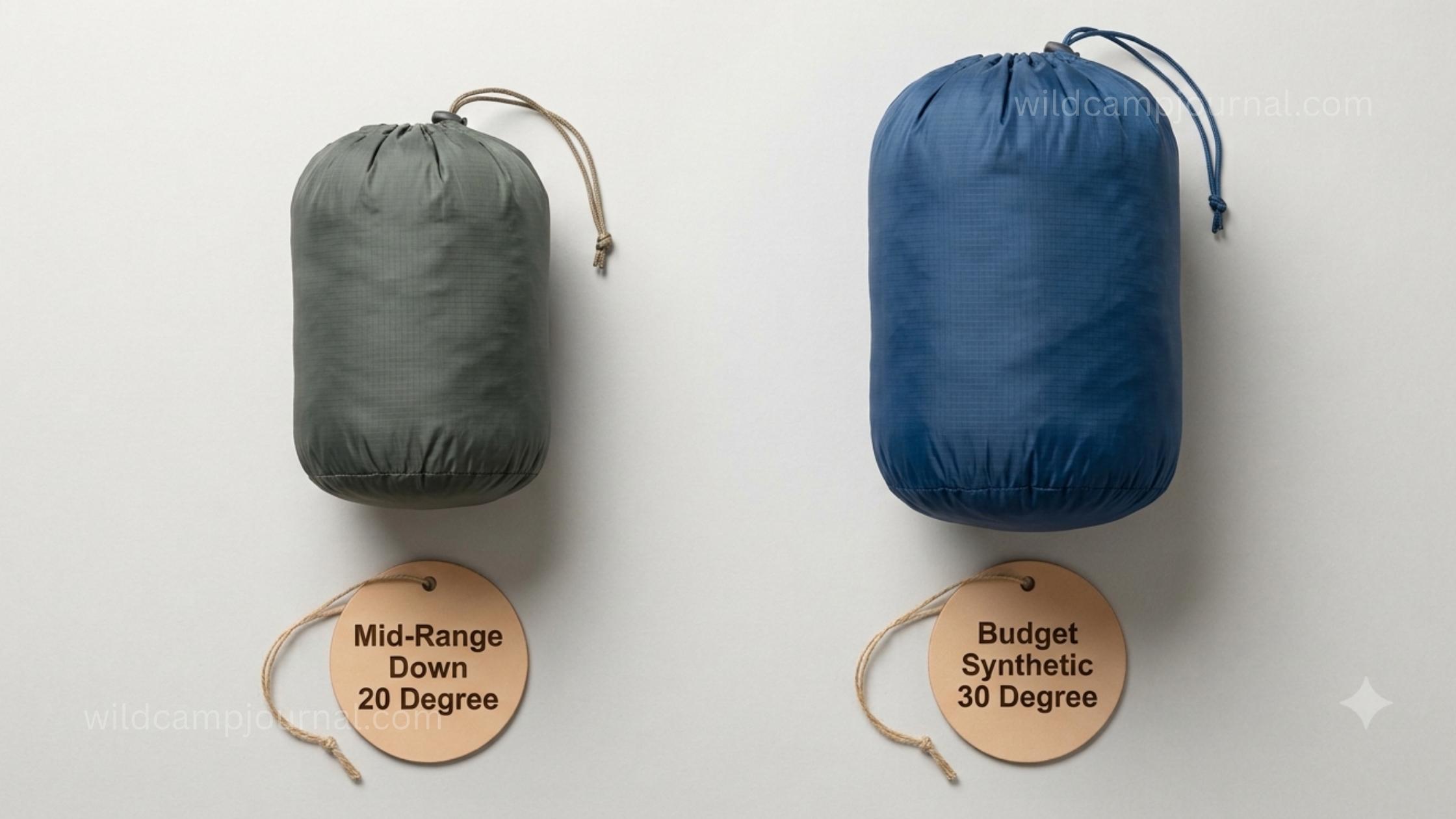
Down provides the highest warmth-to-weight ratio of any sleeping bag insulation. A 20 degree down bag weighs less and packs smaller than a 20 degree synthetic bag of comparable quality. High-quality down is measured by fill power, which describes how much space one ounce of down occupies. Higher fill power means more air space per ounce, which means more insulation for less weight.
For camping use: 550 to 650 fill power is adequate for three-season camping at a fair price. 700 to 800 fill power offers better warmth-to-weight for backpacking. 850 fill power and above is premium territory used in high-end lightweight bags.
The trade-off: down loses warmth when wet and dries slowly. In reliably dry conditions, down is the superior choice. In wet climates, hydrophobic down treatment reduces but does not eliminate this weakness.
Synthetic Insulation
Synthetic fills retain a meaningful percentage of their warmth when wet and dry significantly faster than down. They are heavier and bulkier for the same rated temperature but cost less and require less careful maintenance.
For car camping where weight is not a concern and wet conditions are possible, a synthetic bag is a practical choice that eliminates the moisture risk of down. For backpacking where every gram and cubic centimetre matters, down delivers better performance at the weight penalty synthetic cannot match.
Still unsure which insulation type is right for your conditions? This 2026 video compares both types in real camping use with honest trade-offs.
Our Top 5 Sleeping Bag Recommendations by Temperature Rating
Each pick is chosen for a specific temperature range and use case. All five are available on Amazon.com.
Pick 1 — Best Summer Sleeping Bag (35 to 45 Degree Rating)
Coleman Brazos 40°F Sleeping Bag
Price: $35 to $50 | Temperature Rating: 40°F | Insulation: Synthetic Shape: Rectangular | Weight: 3.4 lbs | Best for: Car camping, summer use
The Coleman Brazos is the most field-tested budget sleeping bag in the US market. OutdoorGearLab testers used it across multiple overnights including nights in Bryce Canyon National Park where temperatures dropped into cold conditions. The rectangular shape gives generous room for movement and allows the bag to be fully unzipped and used as a blanket. The synthetic fill handles moisture better than down at this price point.
Who it is right for: Car campers who only camp in summer and want the most affordable functional sleeping bag available.
Utilizes a synthetic fill that manages damp environments far more effectively than low-cost down alternatives.
Pick 2 — Best Three-Season Sleeping Bag (20 Degree Rating)
REI Co-op Radiant 20 Sleeping Bag
Price: $199 to $229 | Temperature Rating: 19°F (ISO Lower Limit) | Insulation: 600-fill down Shape: Mummy | Weight: 2 lbs 11 oz | Best for: Car camping and occasional backpacking
The REI Co-op Radiant 20 is the clearest value pick in the three-season category. The Inertia tested it extensively and confirmed it performs close to its rated temperature with surprising comfort at the shoulders and feet for a bag at this price. The 600-fill down keeps the bag lighter and more packable than synthetic alternatives at the same rating. Nine genderless sizes mean virtually every body type can find a proper fit, which directly affects warmth.
Who it is right for: Three-season campers who want a properly rated down bag at a mid-range price that handles car camping and occasional backpacking.
Packed with 600-fill down, making it significantly lighter and easier to compress on the trail than bulkier synthetic alternatives.
Pick 3 — Best Budget Three-Season Sleeping Bag (30 Degree Rating)
Coleman Kompact 30°F Rectangle Sleeping Bag
Price: $80 to $100 | Temperature Rating: 30°F | Insulation: Synthetic Shape: Rectangular | Weight: 3.1 lbs | Best for: Car camping, three-season use on a budget
REI Expert Advice named the Coleman Kompact 30 their top budget pick for car camping after field testing by 11 co-op members across Washington state, Minnesota, and New Mexico. The synthetic fill handles moisture reliably, the rectangular shape allows free movement, and the dual-zipper system lets you open the bag from the bottom for ventilation on warmer nights. The Climate Neutral certification and bluesign-approved materials are a meaningful sustainability feature at this price point.
Who it is right for: Budget-conscious car campers who want a reliable three-season bag with sustainable credentials and do not need to carry it on a trail.
Features reliable synthetic insulation that handles damp conditions easily, a roomy rectangular shape, and a dual-zipper system for bottom-up ventilation.
Pick 4 — Best Cold Weather Sleeping Bag (0 to 15 Degree Rating)
The North Face Dolomite One Sleeping Bag
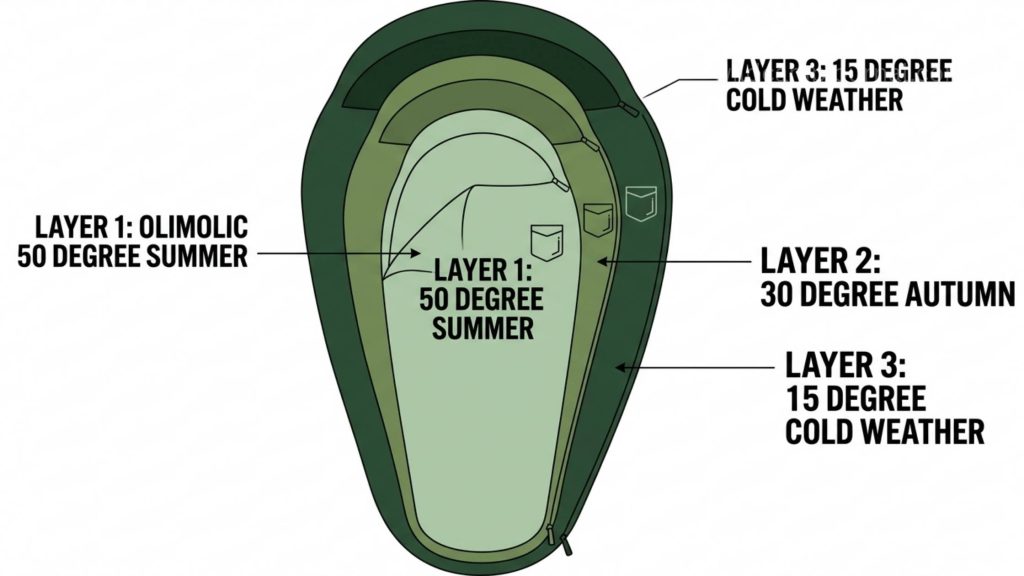
Price: $149 to $210 | Temperature Rating: 15°F / 30°F / 50°F | Insulation: Synthetic (multi-layer) Shape: Rectangular | Weight: 5 lbs | Best for: Car camping across multiple seasons
The North Face Dolomite One was named the best overall camping sleeping bag by The Inertia in their 2026 review. Its multi-layer design separates into three nested bags rated at 15, 30, and 50 degrees, giving a single purchase that covers three temperature ranges. Each layer has its own stash pocket for a headlamp or phone. The full-length zipper unzips the bag flat into a blanket configuration for tent sharing. The trade-off is weight: at 5 pounds this is a car camping bag, not a backpacking bag.
Who it is right for: Car campers who camp across multiple seasons and want one sleeping bag system that handles summer through cold autumn nights without buying multiple bags.
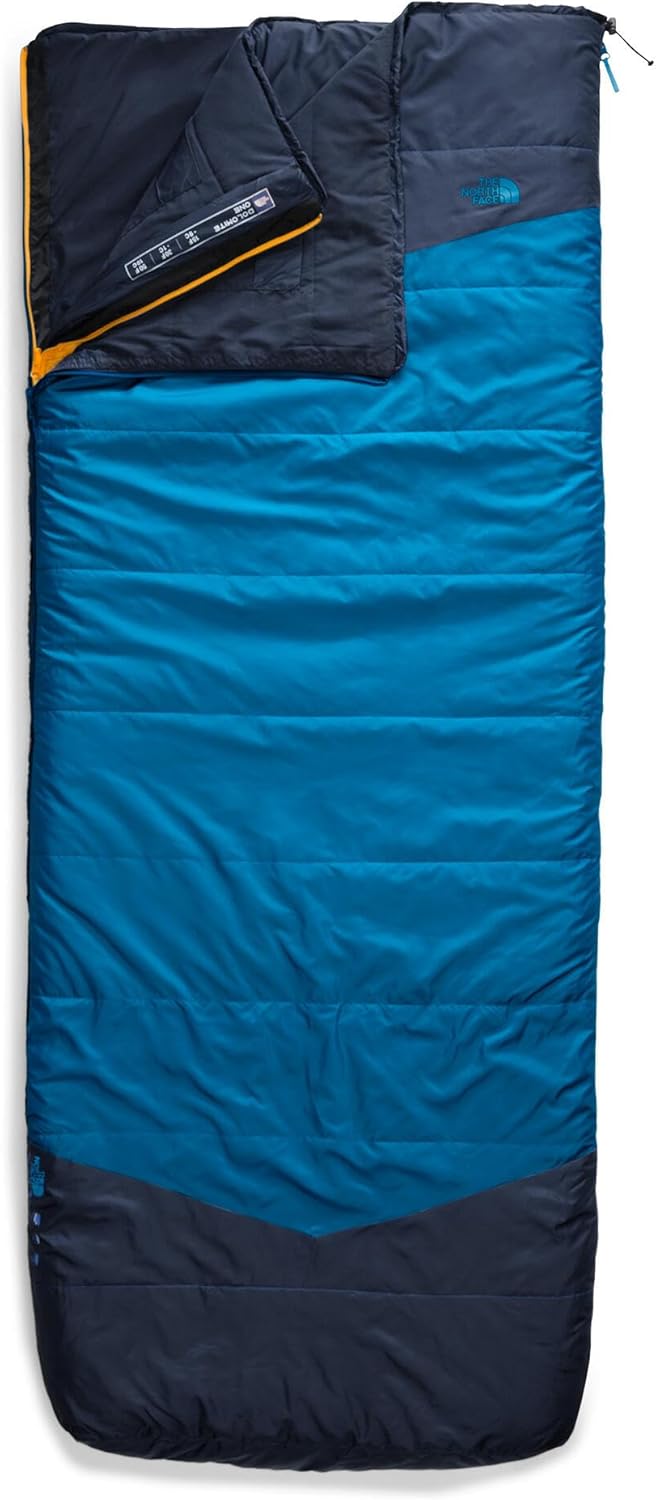
Named the top camping sleeping bag of 2026 by reviewers due to an innovative three-layer nested design that adjusts to 15°F, 30°F, or 50°F conditions.
Pick 5 — Best Premium Sleeping Bag (15 Degree Rating, Backpacking)
Sierra Designs Cloud 20 / 35 Zipperless Sleeping Bag
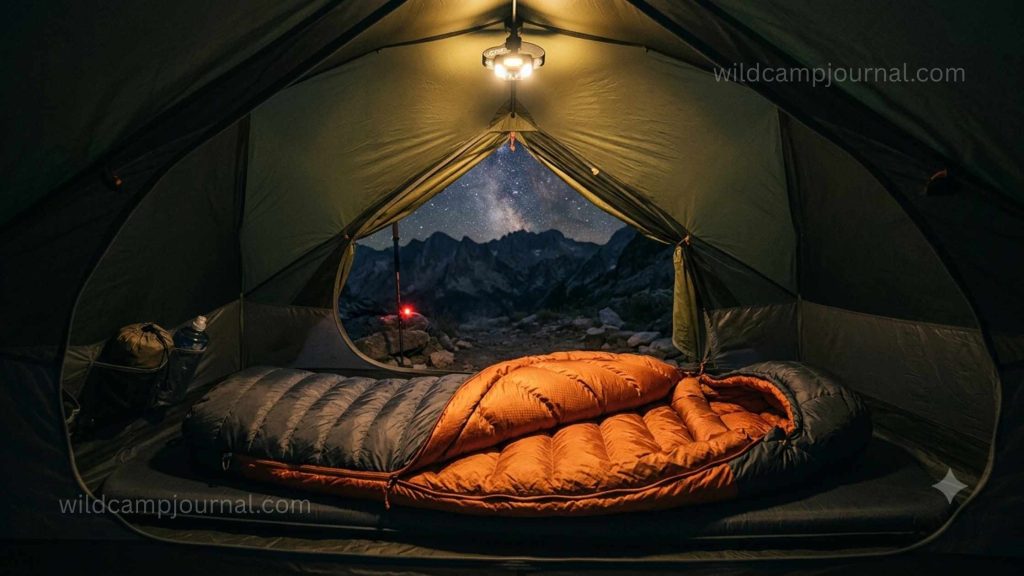
Price: $279 to $340 | Temperature Rating: 26°F ISO Comfort (20° model) / 35°F (35° model) | Insulation: 800-fill DriDown | Shape: Zipperless Mummy / Quilt Hybrid | Weight: 1 lb 13 oz (20° model) / 1 lb 7 oz (35° model) | Best for: Ultralight backpacking, side sleepers, 3-season camping
The Sierra Designs Cloud series completely reimagines backcountry sleep by ditching heavy, snag-prone zippers in favor of an integrated, oversized comforter design. Stuffed with premium 800-fill power hydrophobic DriDown, this award-winning hybrid bag blends the thermal efficiency of a mummy shape with the free-moving comfort of a camp quilt. Outside Magazine named it one of the best backpacking bags for its radical focus on comfort and weight savings. To make the bag so lightweight, Sierra Designs removed the insulation from the bottom torso area, replacing it with an integrated sleeping pad sleeve so your mattress handles the underside insulation.
Who it is right for: Backpackers and cold-weather campers who want the lightest possible bag at a genuine cold-weather rating and are willing to invest in quality that lasts a decade.

The Sierra Designs Cloud is an award-winning, lightweight hybrid sleeping bag that replaces heavy zippers with an integrated comforter for greater freedom of movement.
Quick Comparison Table
| Coleman Brazos | REI Radiant 20 | Coleman Kompact 30 | North Face Dolomite | Sierra Designs | |
|---|---|---|---|---|---|
| Price | $35 to $50 | $199 to $229 | $80 to $100 | $149 to $210 | $279 to $340 |
| Temperature rating | 40°F | 19°F ISO | 30°F | 15/30/50°F | 21°F comfort |
| Insulation | Synthetic | 600-fill down | Synthetic | Synthetic | 850-fill down |
| Shape | Rectangular | Mummy | Rectangular | Rectangular | Mummy |
| Weight | 3.4 lbs | 2 lbs 11 oz | 3.1 lbs | 5 lbs | 2 lbs 3.6 oz |
| ISO rated | No | Yes | No | No | Yes |
| Backpacking use | No | Yes | No | No | Yes |
| Best for | Summer car camping | 3-season all-rounder | Budget 3-season | Multi-season car camp | Cold weather backpacking |
| Amazon | Add to Cart | Add to Cart | Add to Cart | Add to Cart | Add to Cart |
Frequently Asked Questions
What temperature rating sleeping bag do I need for 40 degree nights?
For a 40 degree overnight low, buy a bag with a comfort rating of 25 to 30 degrees. This gives you a 10 to 15 degree buffer below the expected low, which accounts for weather variation, wind chill inside the tent, and differences in individual cold sensitivity. A bag with a lower limit rating of 20 degrees is appropriate here for most campers. Do not buy a bag with a comfort rating right at 40 degrees and expect to sleep well.
Is a 20 degree sleeping bag good for summer camping?
Yes, a 20 degree sleeping bag works well for summer camping at altitude or in northern regions where overnight temperatures regularly drop into the 20s and 30s. It is heavier and warmer than you need for low-elevation summer camping where nights stay above 50 degrees. If you only camp in warm conditions below 4,000 feet elevation in summer, a 30 to 40 degree bag is sufficient and lighter to carry.
How accurate are sleeping bag temperature ratings?
ISO and EN rated bags are reasonably accurate as averages across a population, but they cannot account for individual variation. Personal factors including your metabolism, body fat, hydration, what you ate before sleeping, your sleeping pad’s R-value, and whether you are a warm or cold sleeper all affect real-world performance. As a general rule, treat the comfort rating as accurate for average sleepers, build in a 10 degree buffer below your expected overnight low, and size up if you know you sleep cold.
Does a sleeping pad change your sleeping bag temperature rating?
The sleeping pad does not change the bag’s stated rating, but it directly determines how close to that rating the bag performs in real conditions. The ISO test places the bag on a sleeping pad because the bag’s insulation beneath you compresses under body weight and loses its warming ability. Without an adequate sleeping pad, any sleeping bag performs colder than its rated temperature. Match your pad’s R-value to your bag’s temperature range: R-value 2 to 3 for summer bags, R-value 3.5 to 4.5 for three-season bags, R-value 5 or above for winter bags.
What does comfort rating mean on a sleeping bag?
The comfort rating is the temperature at which an average cold-sleeping woman can sleep through the night without waking up cold. It is the most conservative of the three ISO temperature thresholds. If you are a cold sleeper or camping in conditions where you want to be sure of sleeping well, buy to the comfort rating, not the lower limit or the number in the bag’s name. Most bags are marketed using their lower limit rating, which is 10 to 15 degrees warmer than the comfort rating.
Can you survive in a 20 degree sleeping bag at 0 degrees?
At 20 degrees below the bag’s lower limit rating, survival depends heavily on what you are wearing inside the bag, your sleeping pad’s R-value, and shelter quality. A 20 degree rated bag at 0 degrees is operating 20 degrees beyond its lower limit, which places you near or beyond the bag’s extreme rating. Adding a base layer, insulated jacket, and hat inside the bag provides additional warmth and may keep you comfortable enough to sleep, but this is not a setup to rely on for planned 0 degree camping. Buy the right bag for the conditions you will actually camp in.
Conclusion
The sleeping bag temperature rating that is right for you comes down to three things: the coldest night you expect, whether you sleep warm or cold, and what sleeping pad you are pairing with the bag.
Get those three right and the product choice becomes straightforward. Summer camping at low elevation needs a 35 to 45 degree bag. Three-season camping across spring, summer, and autumn needs a 15 to 25 degree bag. Cold weather and winter camping needs 0 degrees or below with a sleeping pad R-value to match.
The most common and most avoidable mistake is buying a bag based on the lower limit rating in the product name and camping at temperatures close to that number. Always build in a 10 to 15 degree buffer below your expected overnight low, and your bag will keep you warm rather than just keep you alive.